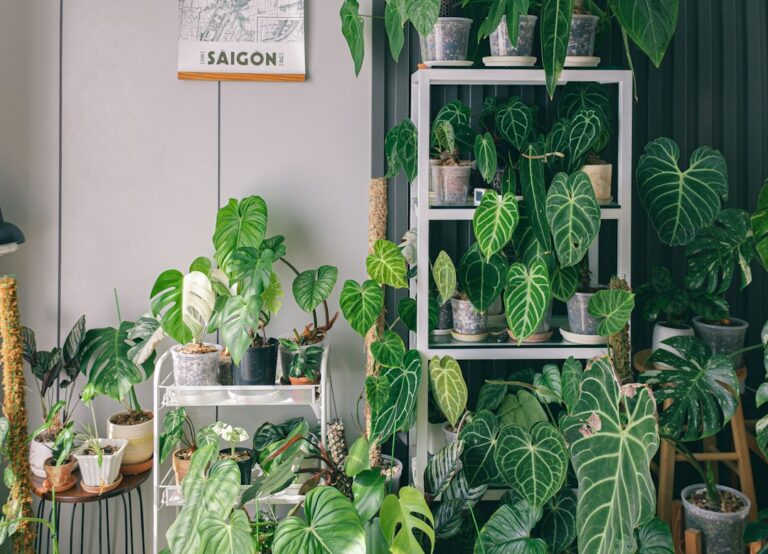
The Complete Guide to Indoor Plant Care Basics
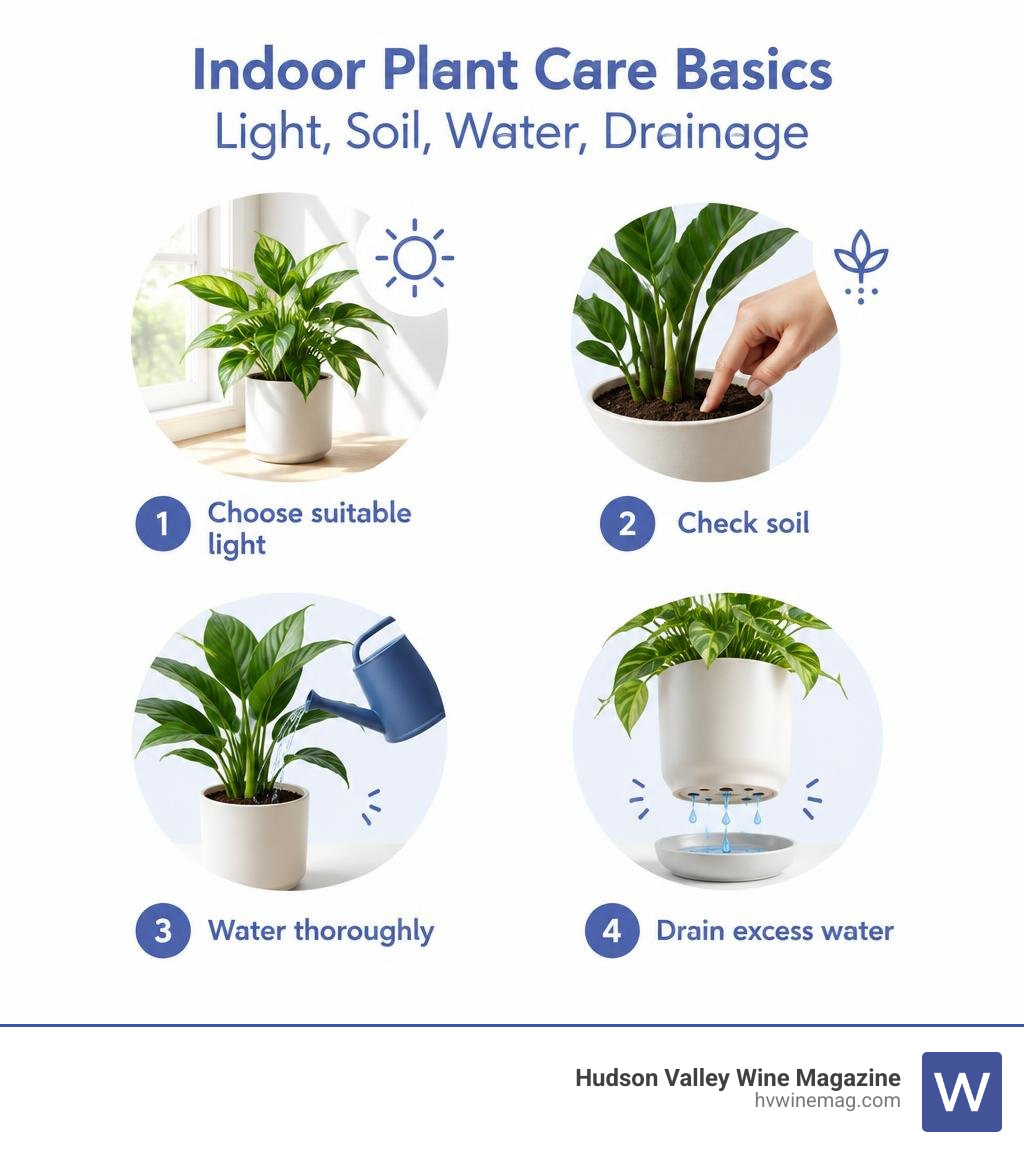
Indoor Plants: Start With Light, Water, and Drainage
The best way to care for indoor plants is to match each plant to the light you have, check the soil before watering, and use a pot with drainage holes. For an easy start, try a snake plant or ZZ plant. Both tolerate lower light and need their soil to dry between waterings. If you have cats or dogs, check pet safety before bringing any plant home; neither of these is safe to eat.
You do not need a fixed watering day. A quick soil check will tell you more than a calendar can.
Similar topics to indoor plants:
The Best Indoor Plants for Beginners and Low-Maintenance Spaces
Cultivating indoor greenery should bring tranquility rather than stress into our daily living spaces. Selecting the right species sets us up for success from day one, allowing us to enjoy lush foliage without demanding round-the-clock maintenance. The most resilient houseplants share common evolutionary traits: drought tolerance, flexible lighting needs, and thick leaf structures that store moisture during periods of neglect.
| Houseplant | Light Requirements | Watering Frequency | Typical Growth Rate | Pet Toxicity |
|---|---|---|---|---|
| Snake Plant (Dracaena trifasciata) | Low to bright indirect | Every 2–6 weeks (Spring/Summer), 4–8 weeks (Winter) | Moderate (reaches 2–3 ft indoors) | Toxic (contains saponins) |
| ZZ Plant (Zamioculcas zamiifolia) | Low to medium indirect | Every 2–3 weeks (let soil dry completely) | Slow (12–24 in over years) | Toxic (calcium oxalate) |
| Monstera Deliciosa | Medium to bright indirect | Every 1–2 weeks | Fast (1–2 ft per year) | Toxic (calcium oxalate) |
| Dwarf Umbrella Tree (Schefflera arboricola) | Bright filtered | Every 1–2 weeks (top inch dry) | Fast (4–6 ft indoors) | Toxic (calcium oxalate) |
| White Bird of Paradise (Strelitzia nicolai) | Bright direct to bright indirect | Every 1–2 weeks | Moderate (3–6 ft indoors) | Mildly toxic |
| Calathea Freddie | Medium to low indirect | Weekly (top half dry) | Slow (3–6 in per year) | Pet-Safe / Non-toxic |

Resilient Foliage: Snake Plant and ZZ Plant
When designing low-maintenance interior plant displays, two species stand head and shoulders above the rest: Dracaena trifasciata (formerly Sansevieria trifasciata) and Zamioculcas zamiifolia (commonly known as the ZZ plant).
The snake plant is virtually indestructible as long as it is not drown in excess moisture. Originating from arid environments, it utilizes Crassulacean Acid Metabolism (CAM) photosynthesis. This metabolic pathway allows the plant to open its stomata exclusively at night to capture carbon dioxide, preventing moisture loss during hot daytime hours. According to botanical data, an indoor snake plant typically matures to 2–3 feet tall, though wild specimens can reach up to 6 feet. Reviewing a detailed Sansevieria trifasciata care guide reveals that overwatering accounts for almost all premature deaths in this species; it thrives when watered only once every 2–6 weeks in warmer months and every 4–8 weeks in winter.
Equally sturdy is the East African ZZ plant. Equipped with bulbous underground rhizomes that store water like internal canteens, it tolerates extreme neglect, dry air, and windowless office settings. Reviewing everyday consumer experiences highlights why ZZ plant care and features consistently earn glowing praise, maintaining a 4.8 out of 5-star rating across hundreds of user reviews for its sheer resilience.
Statement Greenery: Monstera Deliciosa, Umbrella Tree, and Bird of Paradise
For spaces that call for architectural scale and vibrant focal points, large-leafed tropical species offer unmatched presence.
- Monstera Deliciosa: Known as the Swiss cheese plant, this climbing epiphyte is celebrated for its dramatic leaf fenestrations (natural splits and holes). In an indoor environment, Monstera plants grow rapidly, adding 1–2 feet of growth annually under proper conditions. Providing a sturdy moss pole mimics its native habit of climbing rainforest tree trunks, encouraging larger leaves with deeper splits. Detailed guides on Monstera deliciosa care and growth emphasize bright, indirect light and thorough waterings every 1–2 weeks.
- Dwarf Umbrella Tree (Schefflera arboricola): Featuring distinctive palmate leaf clusters radiating like the ribs of an umbrella, Schefflera reaches indoor heights of 4–6 feet, and up to 8–10 feet if left unpruned. Exploring a practical Schefflera umbrella plant guide shows that keeping it in bright, filtered light and trimming above leaf nodes maintains a compact, leafy tree silhouette.
- White Bird of Paradise (Strelitzia nicolai): Bringing an upright, coastal feel to rooms with ample ceiling height, this plant thrives in sunny exposures. Examining Bird of paradise potted plant details shows that maintaining indoor temperatures above 59°F (15°C) and offering ample light keeps its broad, paddle-shaped leaves vibrant and healthy.
Mastering Light, Watering, and Humidity for Tropical Houseplants
Healthy houseplants depend on a balance of three primary environmental elements: light intensity, root zone hydration, and ambient humidity.
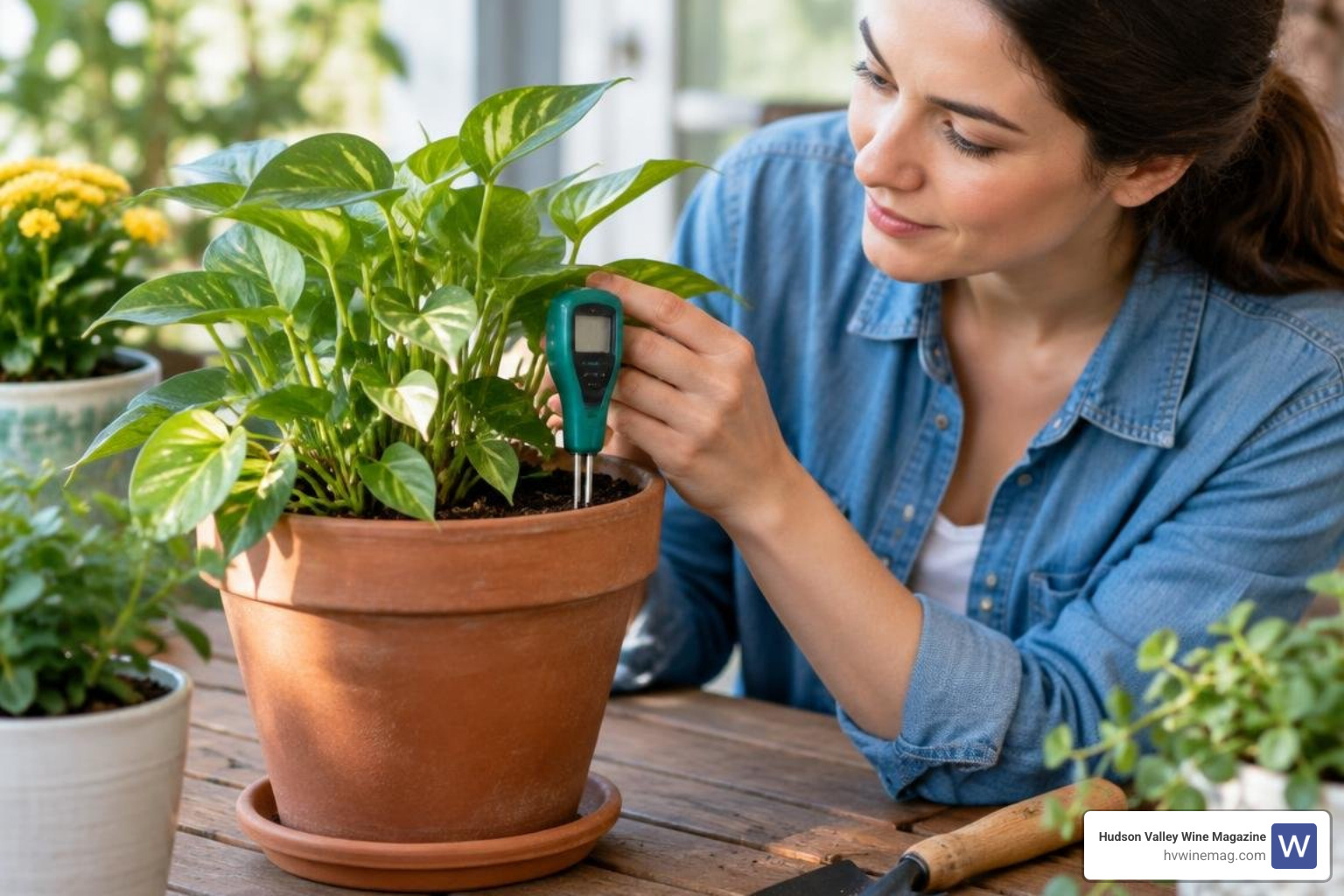
Essential Light Requirements for Indoor Plants
Light fuels photosynthesis, serving as the primary energy source for your plants. Indoor lighting conditions generally fall into four categories:
- Direct Sunlight: Unfiltered sunlight hitting foliage through south- or west-facing windows. Ideal for cacti, succulents, and bird of paradise.
- Bright, Indirect Light: Intense light just outside the reach of direct sunbeams, such as behind sheer curtains or in east-facing rooms. Perfect for Monstera, Schefflera, and Ficus.
- Medium Indirect Light: Gentle, diffused light a few feet back from windows. Well-suited for pothos, philodendrons, and prayer plants.
- Low Light: Shaded corners or rooms with small north-facing windows. Tolerated by snake plants, ZZ plants, and cast iron plants.
Always rotate containers a quarter-turn every couple of weeks to counteract phototropism—the natural tendency of stems to bend toward the nearest light source.
Watering Schedules and Environmental Humidity
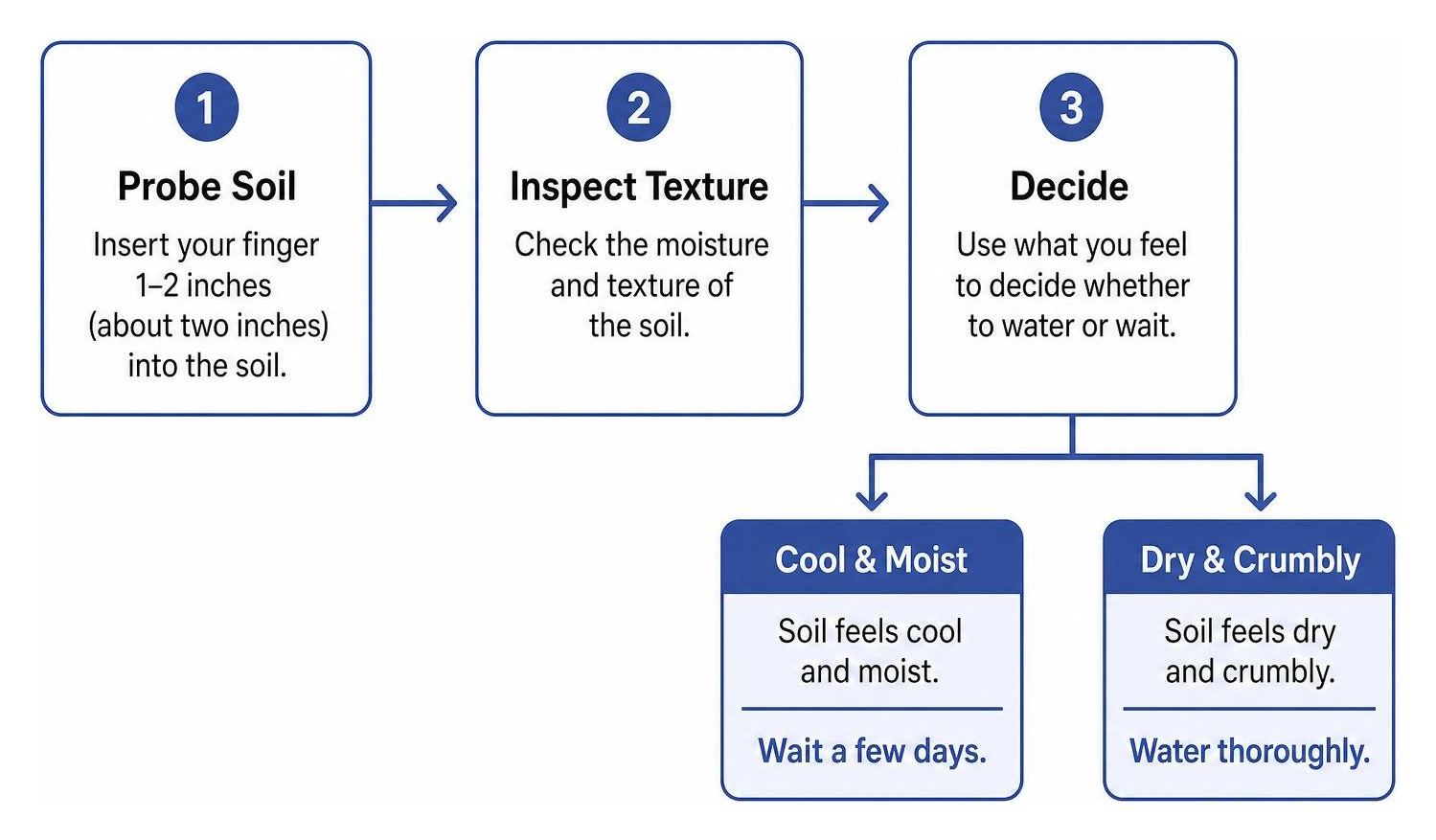
Fixed weekly watering calendars often lead to moisture issues. Ambient temperature, pot size, soil composition, and seasonal dormancy all influence how fast a container dries out. Instead of sticking to rigid dates, use the tactile finger test: insert your finger 1–2 inches into the soil. If you detect cool moisture, wait a few days; if the soil feels dry and crumbly, water thoroughly until liquid runs freely from the drainage holes.
Many tropical species also require higher moisture in the air. For instance, the pet-safe Calathea Freddie pet-safe prayer plant prefers relative humidity levels above 40%. Calatheas exhibit nyctinasty—the daily biological rhythm of folding their leaves upward at night and opening them during the day. When exposed to dry air or underwatering, their leaves curl inward along the margins. Placing containers on a shallow pebble tray filled with water or grouping plants together helps maintain a comfortable localized microclimate.
Essential Soil Selection, Potting, and Repotting Techniques
The health of your foliage reflects the vitality of its root system. Providing an airy, well-draining substrate prevents root suffocation and promotes steady nutrient uptake.
Potting Mix Formulation and Drainage
Standard outdoor garden soil is too heavy for container culture; it compacts over time, choking roots and trapping stagnant water. High-performing indoor potting mixes prioritize aeration and rapid drainage:
- All-Purpose Tropical Mix: 2 parts peat moss or coco coir, 1 part perlite, and 1 part quality compost or pine bark.
- Aroid Mix (Monstera, Philodendron): 1 part standard potting soil, 1 part coarse perlite, 1 part orchid bark, and 1 part horticultural charcoal.
- Succulent & Sansevieria Mix: 1 part standard potting soil and 1 part coarse grit or pumice.
Ensure your pots feature unobstructed drainage holes. Cachepots (decorative planters without holes) should hold an inner plastic nursery pot that can be removed for watering and drainage.
When and How to Repot Houseplants
Most indoor plants benefit from fresh soil every 2–3 years. Signs that your plant has become rootbound include roots circling the surface, emerging through bottom drainage holes, or water running straight through the pot without wetting the soil.
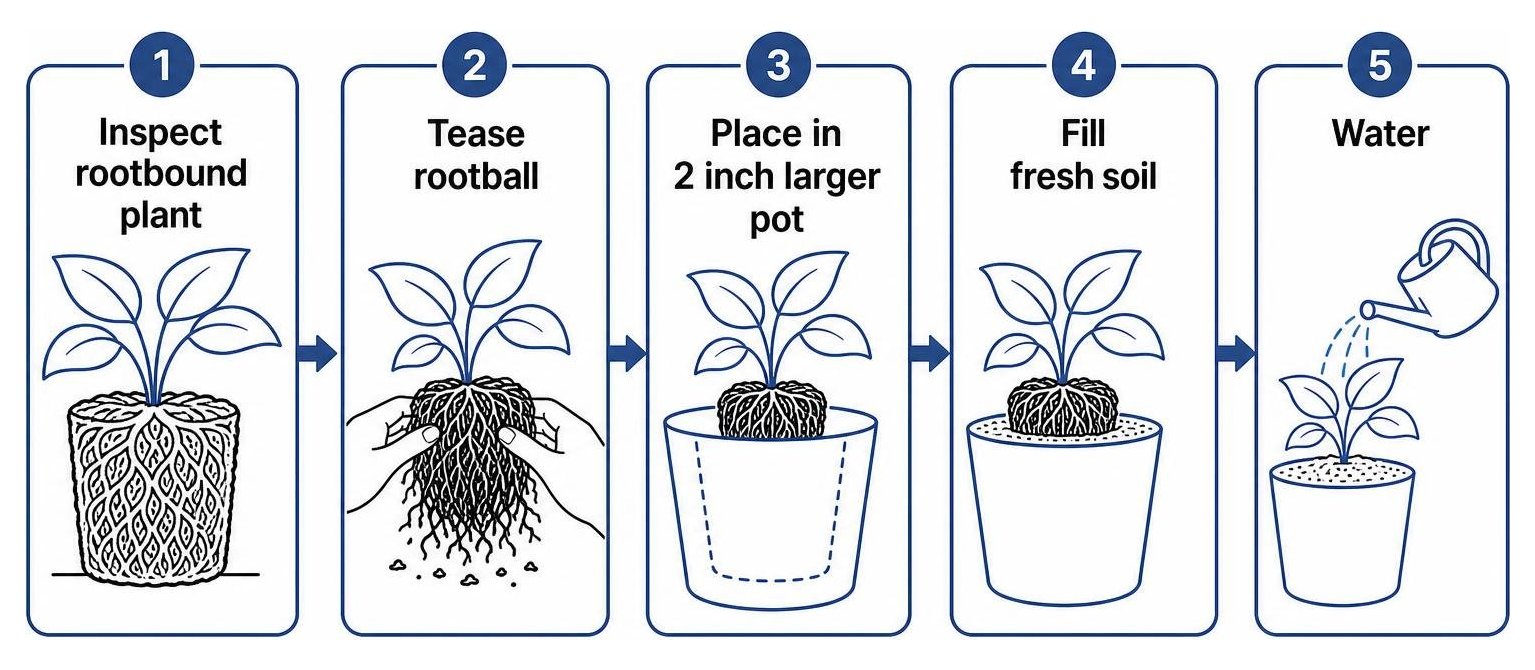
When upgrading containers, select a new pot only 1–2 inches larger in diameter for small plants, or 2–3 inches larger for floor specimens. Oversized containers hold excessive soil volume that stays damp too long, increasing the risk of root rot.
Troubleshooting Common Problems, Pet Safety, and Propagation
Even experienced plant owners encounter occasional pest issues or discolored foliage. Recognizing early warning signs allows us to correct problems before permanent damage occurs.
Household Pet Safety: Toxic vs. Pet-Friendly Varieties
Before bringing new greenery into your home, it is essential to check its safety around curious pets:
- Insoluble Calcium Oxalate Crystals: Found in Monstera, ZZ plant, Schefflera, and Philodendron. Chewing these leaves releases microscopic needle-like crystals that cause intense oral burning, excessive drooling, and digestive upset in cats and dogs.
- Saponins: Found in Snake plants (Dracaena trifasciata). Ingestion leads to nausea, vomiting, and gastrointestinal irritation.
- Pet-Safe Alternatives: Non-toxic options include Calatheas (such as Calathea Freddie), Peperomias, Boston Ferns, Spider Plants, and Haworthia succulents.
How to Propagate Popular Indoor Plants
Multiplying your indoor plant collection is straightforward and cost-effective:
- Stem Cuttings (Monstera, Pothos, Schefflera): Snip a healthy stem just below a visible leaf node (the small swelling where roots emerge). Place the cutting in clean water in bright, indirect light, replacing the water weekly until roots reach 2 inches long, then pot into moist soil.
- Rhizome Division (Snake Plant, ZZ Plant, Calathea): Remove the root ball from its container during spring repotting. Gently separate distinct clusters or rhizomes with a sanitized knife, ensuring each division retains healthy roots and stems.
- Leaf Cuttings (Snake Plant): Cut a mature leaf into 3-inch sections. Let the cut ends callous for two days, then insert them upright into moist perlite or sandy soil. Variegated cultivars like ‘Laurentii’ revert to solid green when grown from leaf cuttings; rhizome division is necessary to preserve golden leaf borders.
Frequently Asked Questions About Houseplant Care
How do I know if I am overwatering or underwatering?
Overwatering typically causes lower leaves to turn soft and yellow, accompanied by mushy brown stems and sour-smelling, persistently soggy soil. Underwatering presents as dry, brittle leaf margins, overall drooping, and soil that pulls away from the inside edge of the container.
Why are my houseplant’s leaves turning yellow or brown?
Yellowing (chlorosis) usually stems from overwatering, poor drainage, or low light levels. Crispy brown tips often indicate low relative humidity, dry soil, or a sensitivity to minerals and fluoride found in municipal tap water. Using filtered water or letting tap water sit overnight helps prevent tip burn on sensitive prayer plants.
What is the ideal temperature and humidity range for tropical indoor species?
Most tropical houseplants thrive in ambient temperatures between 65°F and 75°F (18°C–24°C) during the day, remaining comfortably above 55°F–60°F (13°C–16°C) at night. Keep plants protected from cold window drafts, air conditioning vents, and heat sources. Maintaining relative indoor humidity between 40% and 60% supports vibrant foliage year-round.
Conclusion
Caring for indoor greenery connects us directly to natural growth cycles, enriching our living spaces with fresh color and architectural form. Much like discovering regional craft beverages or taking tradition forward at Angry Orchard Cider House, developing a green thumb is all about patience, observation, and appreciating the local environment. By matching species to your natural lighting, watering based on real soil moisture, and selecting pet-safe varieties where needed, your indoor garden will thrive for years to come.