Ultimate Checklist for Boba Tea Options
Boba Tea: What Goes in the Cup?
Boba tea is a customizable drink that often pairs brewed tea with milk or fruit flavor, sweetener, and a topping such as chewy tapioca pearls. Unlike regular milk tea, it offers texture as part of the drink. Not every boba drink contains milk, and some contain no tea at all.
Born in Taiwan, boba tea is now enjoyed around the world. To choose a cup, start with a milk tea or fruit tea, pick one topping, then set your sweetness and ice levels. This checklist will help you find a drink that fits your taste.
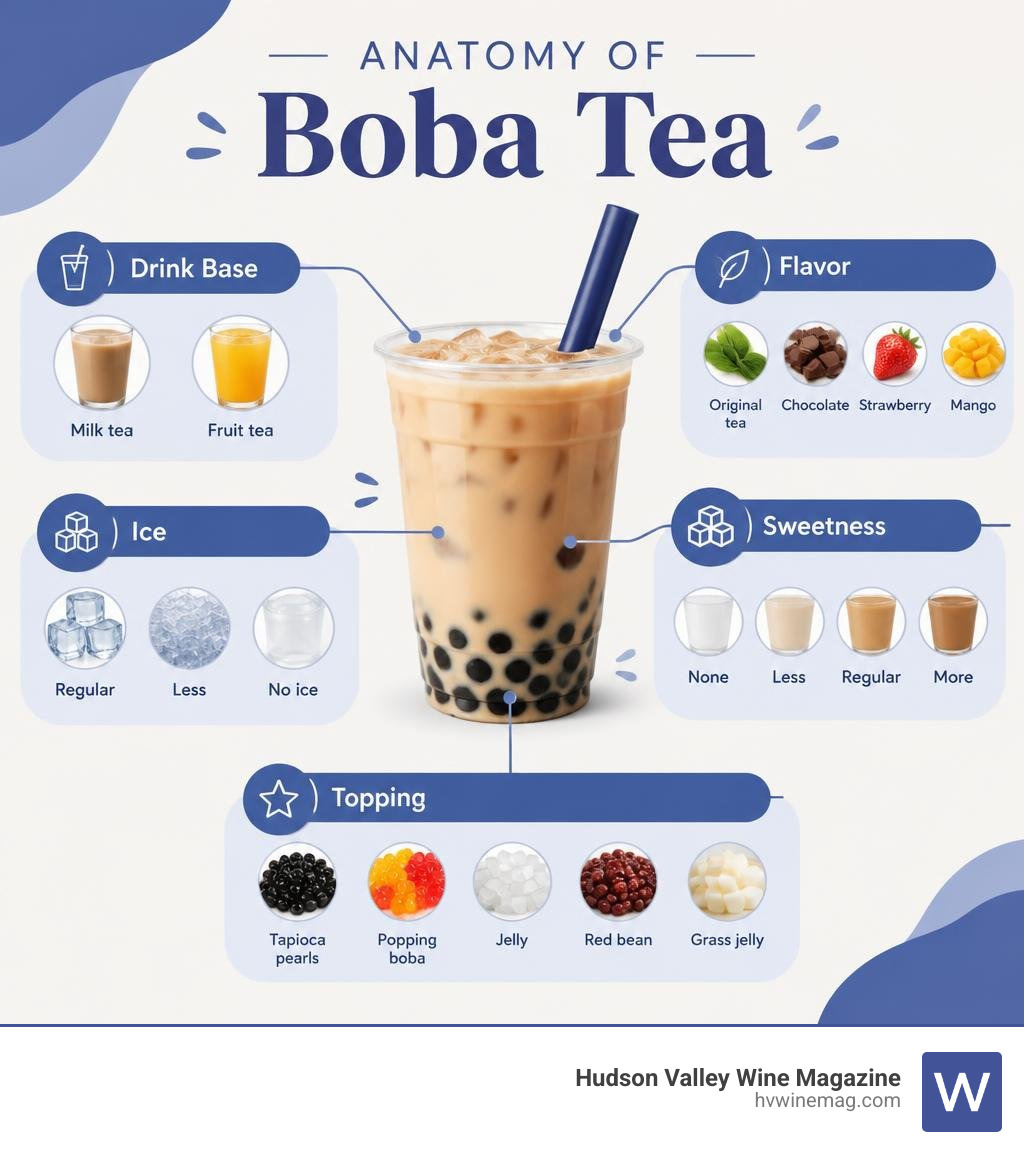
Simple guide to boba tea:
Understanding Boba Tea: Origins and Core Drink Styles
At its core, the beverage revolves around the interplay between a liquid base and a textural element. The star topping—tapioca pearls—originates from the starch of the cassava root, a tuber native to South America that found its way across global agricultural routes into Asian culinary traditions. When processed into starch, rolled into spheres, and simmered in caramelized sugar, cassava yields a bouncy, chewy bite that defines the classic drink.
The beverage category has exploded on an international scale. Valued at roughly US$2.4 billion in 2022, the global market is projected to reach US$4.3 billion by 2027. In Mainland China alone, annual sales reached roughly US$20 billion in 2019, where bubble tea consumption surpassed coffee fivefold. Across Southeast Asia, it is an everyday ritual; in Vietnam, over 53% of surveyed consumers drink milk tea at least once a week across thousands of specialty shops.
To navigate any modern menu, we must first look at how the core drink families compare:
| Drink Family | Primary Liquid Base | Dairy / Creamer Element | Defining Flavor Character | Best Paired Topping |
|---|---|---|---|---|
| Classic Milk Tea | Bold Black, Oolong, or Green Tea | Fresh milk, oat milk, or non-dairy creamer | Rich, malty or floral, balanced astringency | Traditional tapioca pearls |
| Fresh Fruit Tea | Green (Jasmine) or Four Seasons Oolong | None (water or fruit purée base) | Crisp, tart, bright, citrusy or tropical | Coconut jelly, aloe vera, popping boba |
| Brown Sugar Fresh Milk | None (caffeine-free milk base) | Whole milk or rich oat milk | Deep caramel, molasses, sweet & creamy | Warm brown sugar tapioca pearls |
| Blended Slush / Smoothie | Crushed ice with tea or fruit base | Optional condensed milk or yogurt | Frosty, thick, vibrant, dessert-like | Egg pudding or crystal boba |
Understanding the roots of Bubble tea helps us appreciate why these combinations work so well together.
History and Global Rise of Bubble Tea
The invention of bubble tea traces back to 1980s Taiwan, a fertile period of culinary innovation in local teahouses. Two rival institutions claim credit for the original creation: Chun Shui Tang in Taichung (where product development manager Lin Hsiu Hui reportedly dropped sweetened tapioca pudding balls into iced Assam tea during a staff meeting in 1988) and Hanlin Tea Room in Tainan (where founder Tu Tsong-he was inspired by white tapioca balls seen at a local market). A lengthy decade-long legal dispute concluded in 2019 with a ruling that neither entity held exclusive rights, leaving the drink as a collective cultural treasure of Taiwan.
During the late 1990s, Taiwanese diaspora communities brought the drink to North America, establishing hubs in California, New York, and Vancouver. It quickly grew into a foundational social experience and cultural touchstone for Asian-American youth—fostering the community phrase “boba life.” Over the decades, the beverage entered global pop culture, earning its own Unicode emoji (🧋) in 2020 and a dedicated Google Doodle in early 2023.
Distinguishing Milk Tea from Specialty Drinks
A common point of confusion is treating “milk tea” and “boba tea” as identical terms. Milk tea is simply brewed tea combined with dairy or non-dairy creamer. Boba tea refers to the broader category of drinks served with chewable or textural toppings, regardless of whether milk is present.
Specialty shops offer diverse formats beyond classic milk tea:
- Fruit Teas: Light, aromatic teas (like jasmine green tea) shaken with passion fruit, mango, lychee, or grapefruit juices.
- Fresh Milk Drinks: Caffeine-free creations featuring slow-cooked brown sugar syrup swirling against cold, creamy whole milk.
- Cheese Foam Drinks: Brewed teas topped with a velvety, whipped layer of cream cheese, condensed milk, and sea salt, designed to cut through tea tannins with savory richness.
- Blended Smoothies & Slushes: Frozen tea or fruit mixtures ideal for warm weather.
- Boozy Boba: Craft cocktail lounges and modern bars combine fruit teas and popping boba with vodka, rum, or soju for adult twists on street-style classics.
The Ultimate Topping Selection Guide
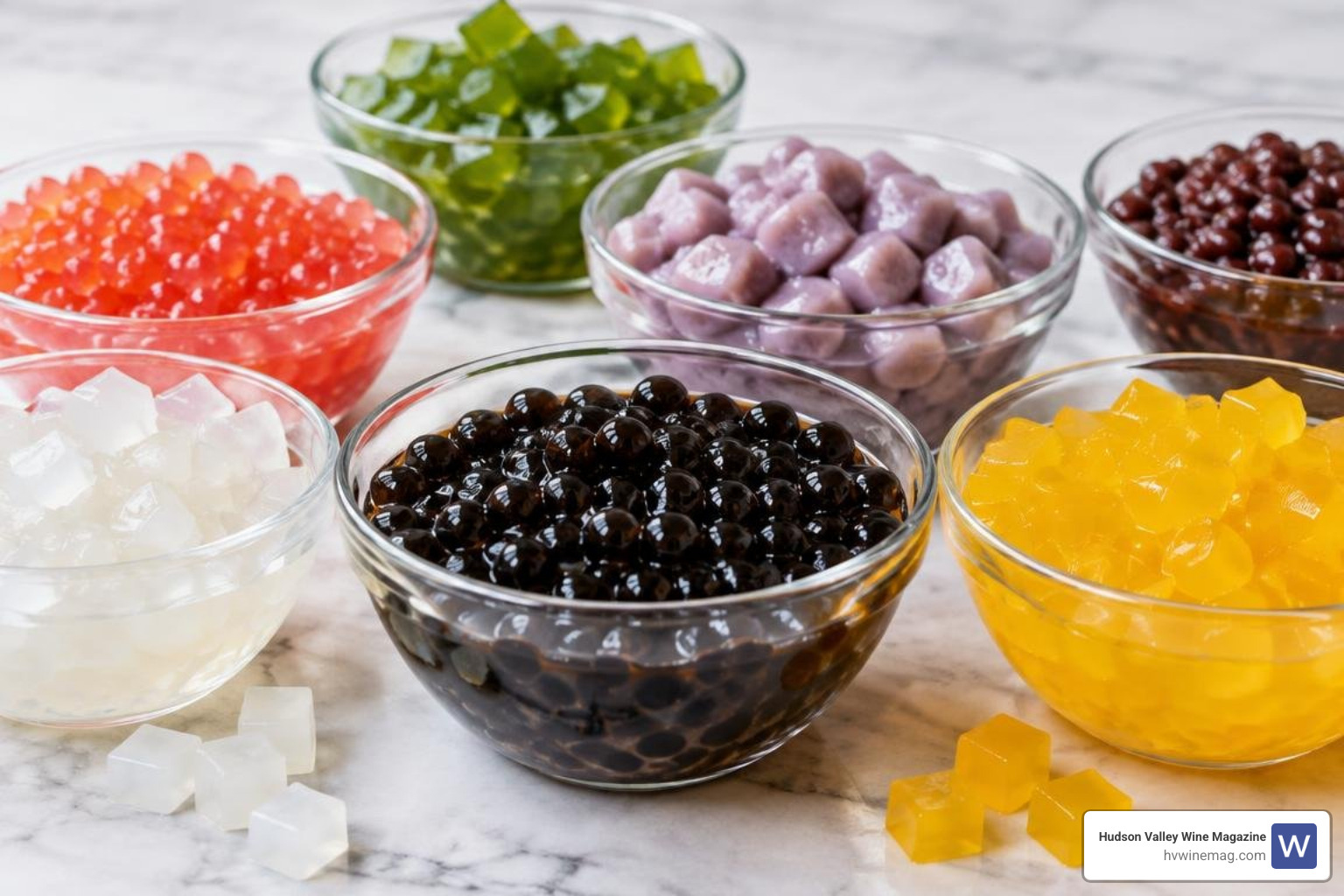
In Taiwanese food culture, the ideal texture is often described as “QQ”—an onomatopoeic descriptor for bouncy, springy chewiness. The topping transforms a standard beverage into an interactive culinary experience, creating sensory contrast with every sip drawn through an oversized straw.
Traditional Tapioca Pearls vs Popping Boba
The original tapioca pearl is crafted from cassava starch, water, and dark brown sugar. When cooked properly, it offers a soft exterior with a springy, toothsome center, coated in rich brown sugar syrup.
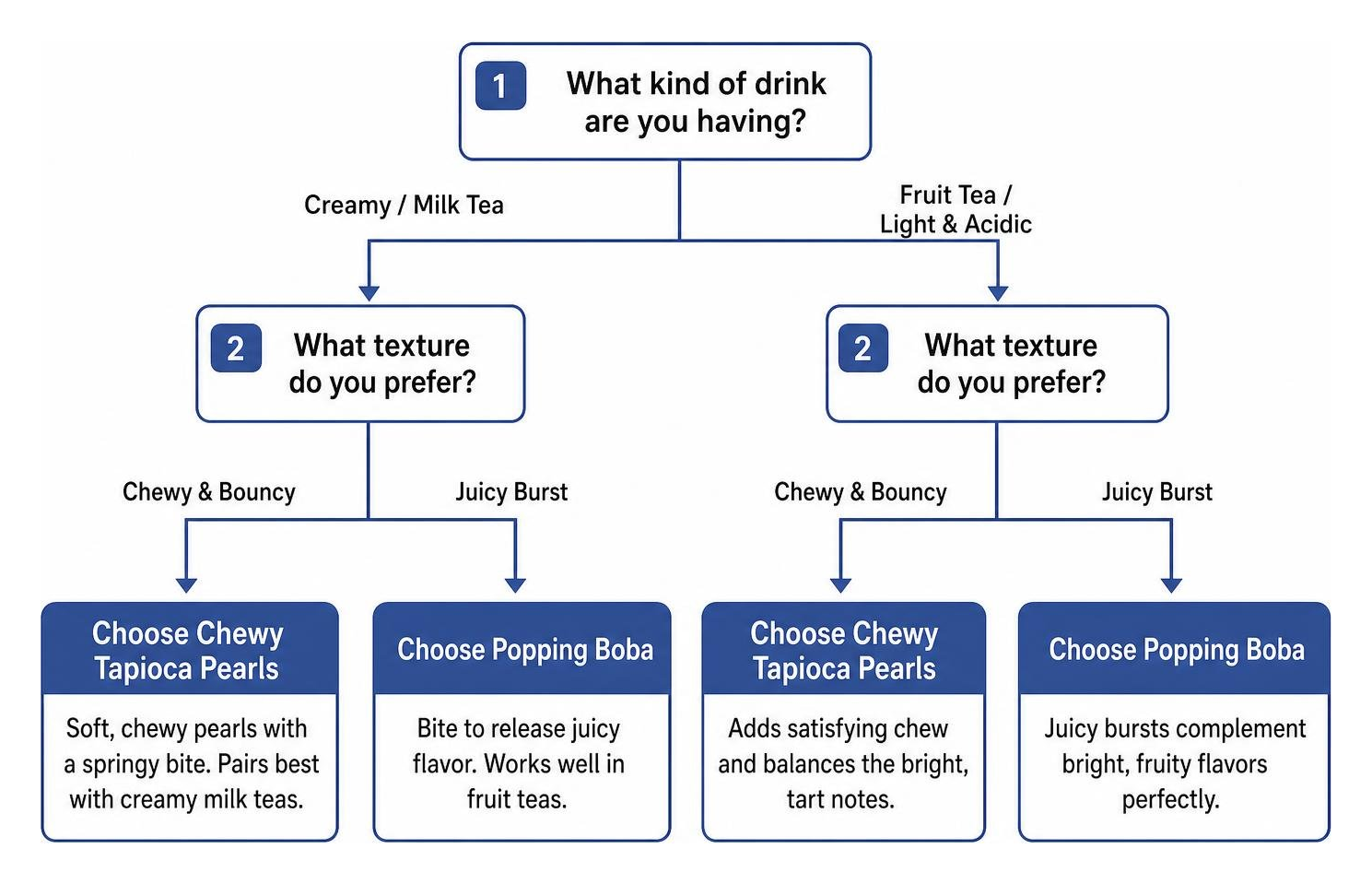
In contrast, popping boba is a modern invention borrowing molecular gastronomy techniques known as spherification. A thin calcium alginate skin encases fruit juice. Instead of chewing, biting down causes the pearl to burst instantly, releasing liquid into the mouth. While classic pearls complement warm, creamy milk teas, popping boba pairs best with cold, acidic fruit teas.
Textural Jellies, Puddings, and Cheese Foams
Modern menus feature a wide array of alternative textures:
- Grass Jelly (Mesona chinensis): A traditional herbal jelly offering a mildly bitter, earthy profile that balances rich, sweet milk teas.
- Coconut Jelly (Nata de Coco): Fermented coconut water cut into firm, translucent cubes that deliver a satisfying, crisp bite.
- Aloe Vera: Diced aloe cubes soaked in light syrup, providing a juicy, hydrating texture for citrus and floral drinks.
- Egg Pudding: A silky, custard-like topping that melts smoothly on the tongue, creating a decadent, dessert-forward drink.
- Crystal Boba (White Pearls): Made from konjac plant fiber rather than cassava starch, these translucent pearls offer a snappier, firmer crunch with fewer calories.
- Salted Cheese Foam: A savory topping layer that balances bitter tannins in freshly brewed oolong or black tea.
The Master Menu Checklist: Customizing Your Drink
Stepping up to a boba counter can feel overwhelming due to the sheer number of options. Approaching the order as a five-step decision process makes customization straightforward:
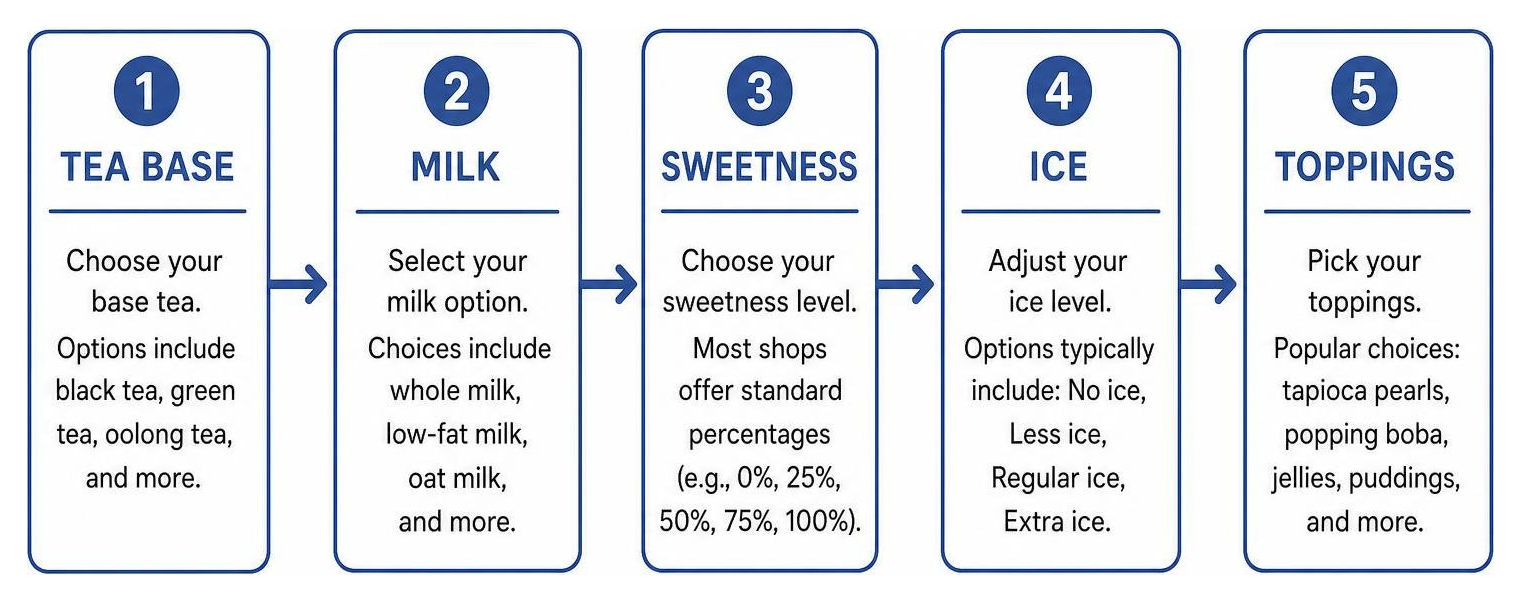
When exploring creative boba flavors, understanding how base teas interact with syrups and toppings makes selecting a drink effortless.
Calibrating Ice Levels and Sweetness Percentages
Most shops allow customers to adjust sugar and ice levels in standardized increments:
- Why Ice Level Matters: Ice chills the drink and regulates dilution. “Less ice” keeps the flavor concentrated as you sip, while “no ice” can sometimes make creamy drinks feel heavier or overly sweet.
- Why Sweetness Matters: Standard 100% sweetness often adds 50 to 70 grams of sugar, which can mask the delicate floral notes of premium tea. Setting sweetness to 25% or 50% allows high-quality tea profiles to shine while keeping calories in check.
Selecting the Best Boba Tea for Beginners
If you are trying boba for the first time, these established combinations offer balanced flavor and texture:
- The Gold Standard: Classic Black Milk Tea (Assam base), 50% sweetness, less ice, with traditional tapioca pearls.
- The Floral & Refreshing: Jasmine Green Tea with Passion Fruit, 30% sweetness, less ice, with coconut jelly.
- The Roasted & Complex: Roasted Oolong Milk Tea, 50% sweetness, regular ice, with herbal grass jelly.
- The Dessert Indulgence: Brown Sugar Fresh Milk, fixed sweetness, regular ice, with warm brown sugar pearls.
Health Considerations and Nutritional Breakdown
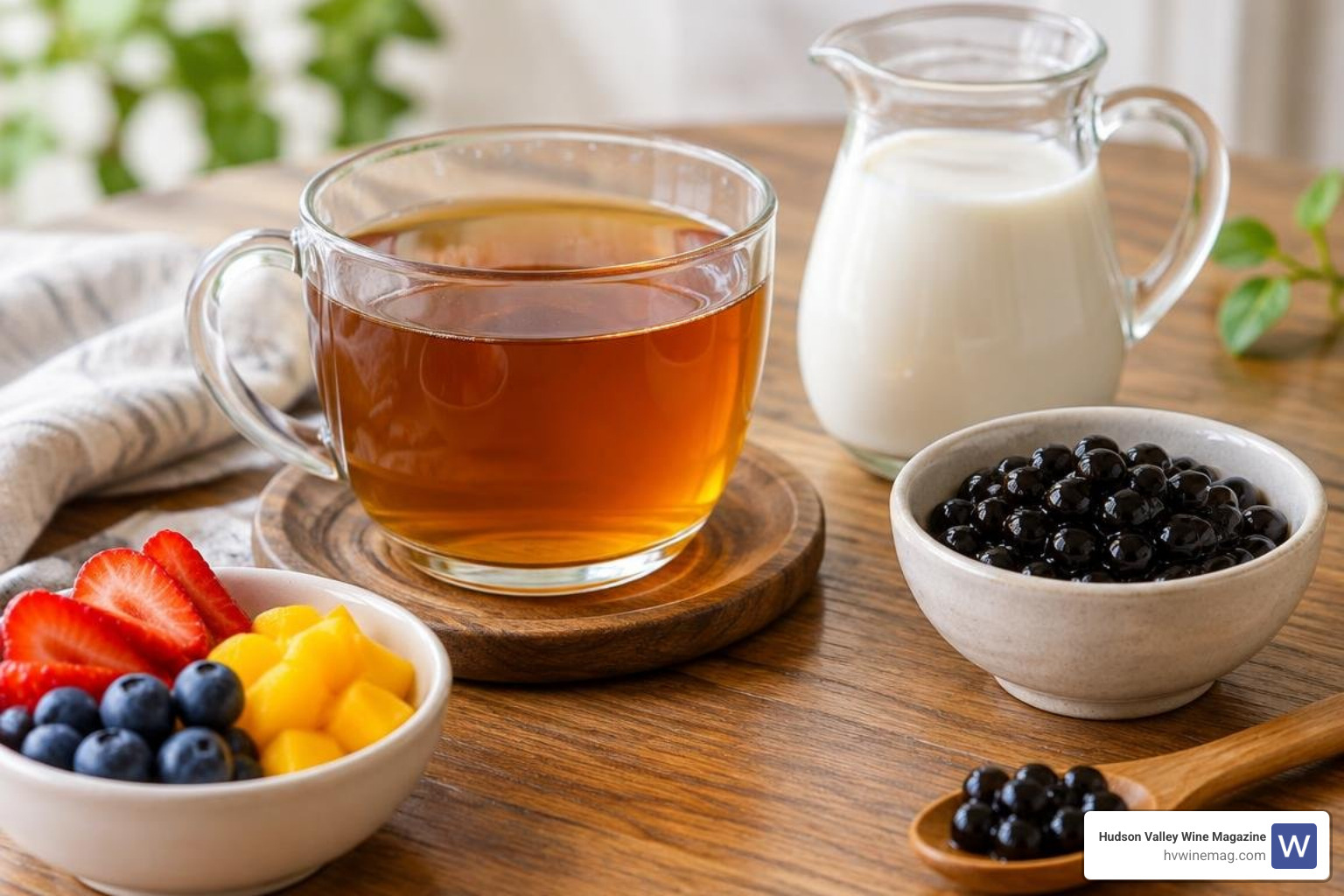
While tea leaves provide natural antioxidants and polyphenols, standard shop preparations can transform tea into a calorie-dense dessert. A standard 500ml (16–24 oz) boba milk tea with full sugar and tapioca pearls contains between 300 and 450 calories, with carbohydrates accounting for a significant portion of that total.
Caloric Density, Added Sugars, and Dairy Substitutes
Toppings contribute substantially to total caloric intake. A single serving of cooked, syrup-soaked tapioca pearls adds roughly 100 to 150 calories alone.
Many shops traditionally rely on powdered non-dairy creamers, which can contain hydrogenated oils. Modern tea houses now offer fresh whole milk alongside plant-based alternatives:
- Oat Milk: Creates a rich, creamy body that complements robust black teas and matcha.
- Soy Milk: Adds a subtle nutty depth that pairs well with roasted oolongs.
- Almond Milk: Offers a lighter consistency suited for fruit-infused drinks.
Managing Caffeine Levels Across Different Teas
Caffeine content depends directly on the steeped tea base:
- Assam & Ceylon Black Tea: Contains roughly 40–80mg of caffeine per serving, delivering an energizing lift comparable to half a cup of drip coffee.
- Green & Jasmine Tea: Provides moderate caffeine (25–45mg) paired with L-theanine for steady focus.
- Roasted Oolong Tea: Delivers medium caffeine levels (30–50mg) alongside deep, earthy roast notes.
- Herbal Infusions, Taro Milk, or Brown Sugar Fresh Milk: Naturally caffeine-free options ideal for evening orders or children.
How to Make Craft Drinks at Home
Crafting artisan beverages at home gives you complete control over ingredient quality, sweetness, and sourcing. Using loose leaf tea yields nuanced, aromatic notes that far surpass commercial powders.
For home brewers seeking a guide to bubble tea bases and brewing, starting with whole-leaf loose tea provides rich flavor that stands up well to milk and ice.
Brewing Fresh Loose Leaf Boba Tea
Because the drink is poured over ice and mixed with milk, the tea base must be brewed at double strength to prevent dilution:
- Measure Tea: Use 10–15 grams of loose leaf Assam black tea or high-grade jasmine green tea for 250ml of filtered water.
- Water Temperature: Heat water to 203–212°F (95–100°C) for black tea, or 176–185°F (80–85°C) for delicate green teas to prevent bitterness.
- Steeping: Steep black tea for 5 minutes; steep green tea for 3 to 4 minutes.
- Chill: Strain the leaves and let the concentrated liquid cool to room temperature before assembling.
Cooking Chewy Tapioca Pearls from Scratch
Freshly cooked pearls deliver an unbeatable “QQ” bite when prepared using standard cassava starch:
- Boil Water: Bring a large pot of water to a rolling boil using a 10:1 water-to-pearl ratio by volume.
- Add Pearls: Gently drop in uncooked tapioca pearls, stirring continuously until they float to the surface.
- Simmer: Cover the pot and simmer over medium heat for 20 to 25 minutes.
- Rest: Remove from heat and let the covered pot rest for an additional 15 to 20 minutes to soften the core.
- Glaze: Drain the warm pearls and toss them in dark brown sugar syrup. Keep at room temperature for up to 4 hours.
Frequently Asked Questions About Ordering and Ingredients
How long do cooked tapioca pearls stay fresh?
Cooked tapioca pearls maintain their optimal chewy texture for approximately 4 to 6 hours at room temperature. Storing them in the refrigerator causes retrogradation, turning the starch hard and dense.
Are tapioca pearls naturally gluten-free?
Yes. Pure tapioca starch is derived entirely from the cassava root, making it naturally gluten-free. However, always check with individual shops to ensure pre-packaged pearls or flavor syrups do not contain wheat-derived thickeners or cross-contamination.
What is the healthiest way to order boba?
To minimize calories and sugar intake, choose an unsweetened green or oolong tea base, set sweetness to 0% or 25%, opt for oat milk or unsweetened soy milk, and swap tapioca pearls for lower-calorie toppings like aloe vera, grass jelly, or crystal boba.
Conclusion
Boba tea has evolved from an inventive Taiwanese teahouse creation into an international craft beverage phenomenon. Navigating modern menus comes down to simple customization: selecting a well-brewed base, pairing it with complementary toppings, and calibrating sweetness and ice to suit your palate.
At Hudson Valley Wine Magazine, we celebrate craft beverage culture—from local farm-to-bottle fermentation to time-honored brewing traditions worldwide. Whether you are tasting regional cool-climate vintages or taking tradition forward at Angry Orchard Cider House, exploring flavor profiles, sourcing quality ingredients, and appreciating regional craft remains at the heart of every great drink. Keep this checklist handy the next time you step up to your local tea counter to enjoy a balanced, refreshing cup crafted to your exact taste.