
An Essential Guide to Choosing a Baby Stroller: Compare Types & Features
How to Choose a Baby Stroller That Fits Your Life
Start with where you will use it most. A full-size stroller suits daily walks, a lightweight model is easier to carry and store, and a travel system makes car-to-stroller trips simpler. If you are buying for a newborn, check that the stroller has a bassinet, a seat approved for use from birth, or a compatible infant car seat. Then test the fold, measure your trunk, and make sure the wheels can handle your usual paths. Prioritize a secure harness and reliable brakes over looks or extra features.
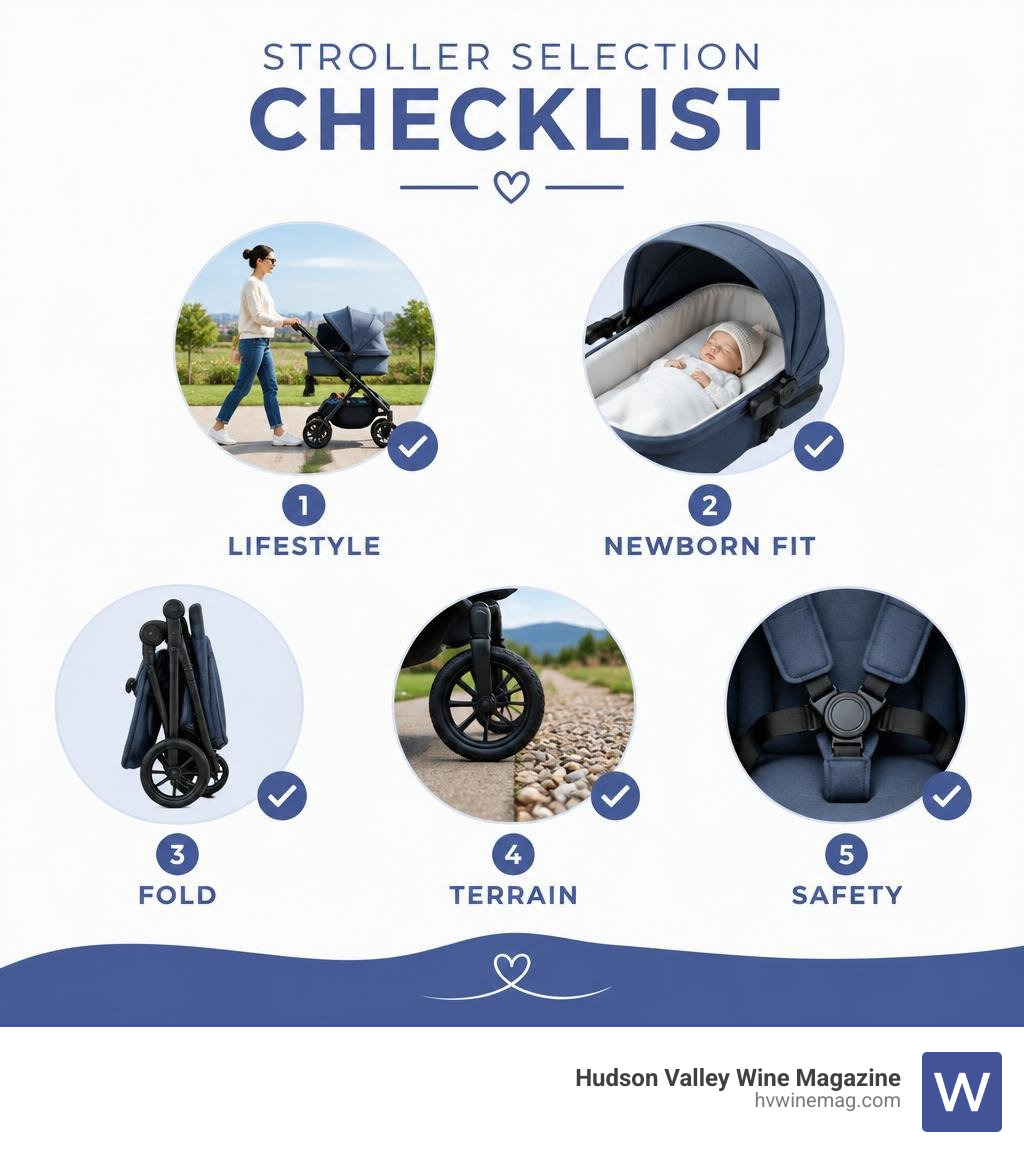
Glossary for how to choose a baby stroller:
Stroller Types Explained: Finding the Right Match for Your Lifestyle
Selecting baby gear often feels like learning an entirely new language. With dozens of categories on the market, understanding how to choose a baby stroller starts with categorizing your routine. Are you navigating narrow city sidewalks, loading gear into an SUV trunk in the suburbs, or navigating gravel country lanes? Matching your lifestyle to a stroller category collapses dozens of confusing options into a clear choice.
To help you get your bearings, explore this comprehensive guide on stroller types alongside the quick breakdown below:
| Stroller Type | Average Weight | Typical Price Range | Best For | Key Trade-off |
|---|---|---|---|---|
| Full-Size / Modular | 18–30 lbs | $250–$900+ | Daily neighborhood walks, all-day comfort | Bulkier frame, heavier lift |
| Lightweight / Travel | 10–18 lbs | $100–$400 | Transit, quick errands, flights | Smaller wheels, less storage |
| Travel System | 20–32 lbs (combo) | $200–$600 | Suburban car-to-walk transfers | Heavy base, outgrown car seat early |
| Jogging / All-Terrain | 24–35 lbs | $200–$600+ | Running, rough trails, uneven terrain | Large footprint, fixed or heavy front wheel |
| Double / Convertible | 26–40 lbs | $200–$800+ | Twins or siblings close in age | Heavy push weight, wide or long frame |
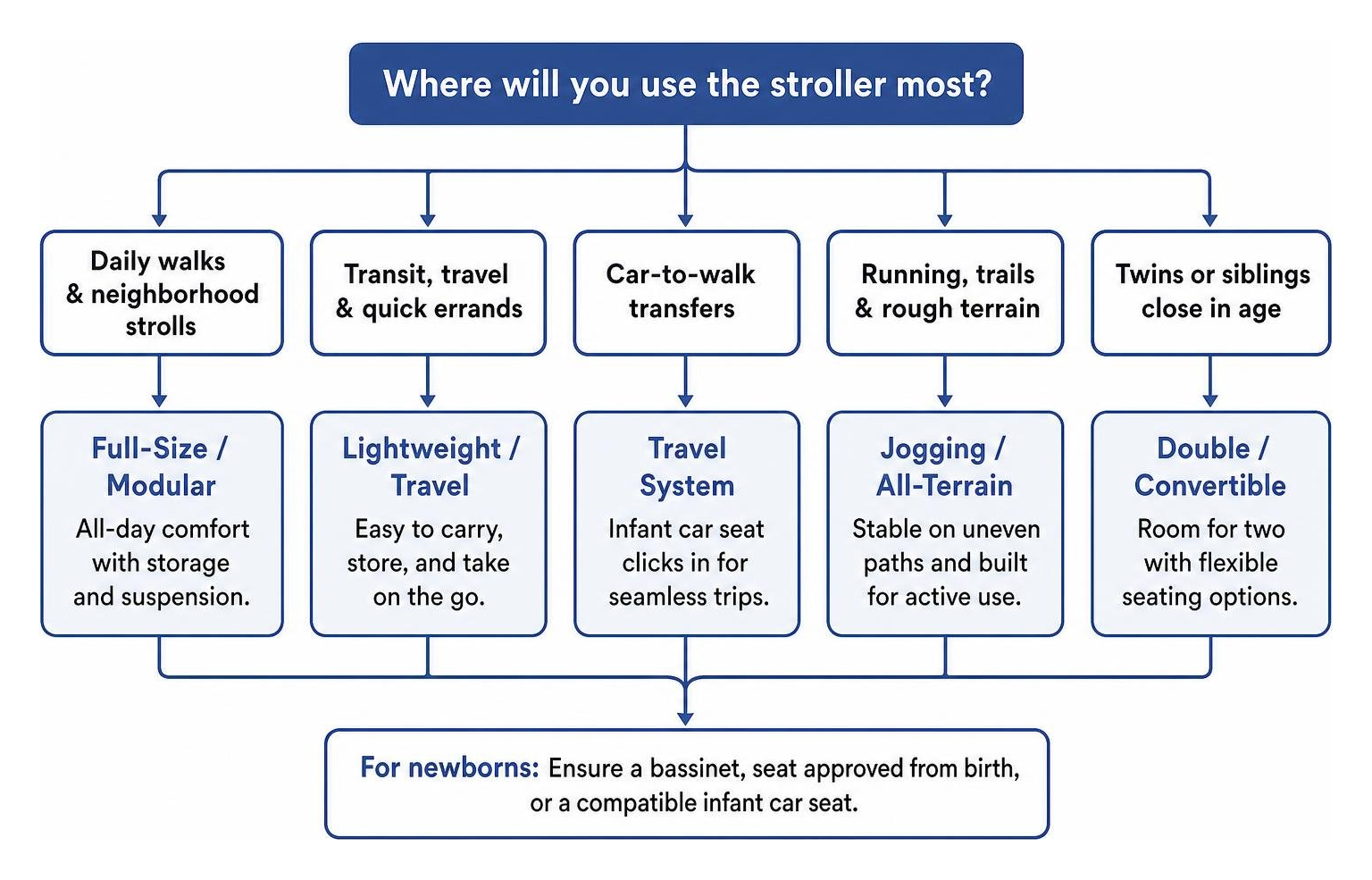
Full-Size and Modular Convertible Strollers
Full-size strollers serve as the daily workhorse for most families. Built with sturdy frames, spacious under-seat storage baskets, and robust wheel suspension, they are engineered for long outings.
A standard mid-price full-size convertible stroller typically weighs around 23.1 pounds and supports children up to 50 pounds. Many full-size models offer modular, reversible seating—allowing an infant to face you for comfort and bonding before switching to forward-facing mode as a curious toddler. While they provide exceptional comfort and durability from birth through age 4, their larger folded footprint requires sufficient storage space in your entryway or trunk.
Lightweight Umbrella and Travel Strollers
When portability is your top priority, lightweight and travel strollers excel. Ranging from 10 to 18 pounds—with modern ultra-compact frames weighing as little as 17.5 pounds or less—these models fold down small enough to fit into compact car trunks, tight closet corners, and even airplane overhead compartments.
They feature smaller wheels and streamlined frames, making them nimble for airport terminals, shopping aisles, and public transit. However, they generally feature smaller storage baskets and less suspension over rough pavement.
Travel Systems and Infant Car Seat Combos
A travel system bundles an infant car seat, a car base, and a matching full-size stroller into a single package. The defining benefit is seamless transfer: you can move a sleeping baby directly from the car back seat onto the stroller chassis without unbuckling them.
Typically priced between $200 and $600, travel systems provide excellent initial value for suburban families who rely heavily on car travel. That infant car seats have a weight limit between 22 and 35 pounds, meaning your child will eventually transition to a convertible car seat while continuing to use the stroller frame.
Jogging and All-Terrain Strollers
Engineered with large, air-filled tires, enhanced shock absorbers, and a lockable front wheel, jogging strollers are built for speed and rough surfaces. Whether you are an avid runner or frequently push across grass, gravel trails, and broken sidewalks, all-terrain models absorb vibrations that would jar a standard frame.
While they offer unmatched maneuverability outdoors, they are significantly bulkier and heavier (often exceeding 28 pounds), making them less practical for quick indoor shopping trips.
Double and Single-to-Double Strollers
Families expecting twins or planning to have two children within two to three years often consider double strollers. These come in two primary layouts: side-by-side or tandem (in-line).
Single-to-double convertible strollers start as a single stroller and use modular adapters to add a second seat, bassinet, or ride-along board later. While single-to-double frames offer future flexibility, they are inherently heavier and longer than dedicated single strollers, which is an important consideration if your second child is still a theoretical plan.
Core Framework: How to Choose a Baby Stroller by Lifestyle
Choosing the best stroller is not about buying the most expensive model; it is about matching engineering to your physical environment. Before comparing cup holders and fabric patterns, walk through this practical decision framework:
- Audit your daily terrain: Do you walk on smooth suburban sidewalks, cracked city concrete, dirt trails, or indoor mall floors?
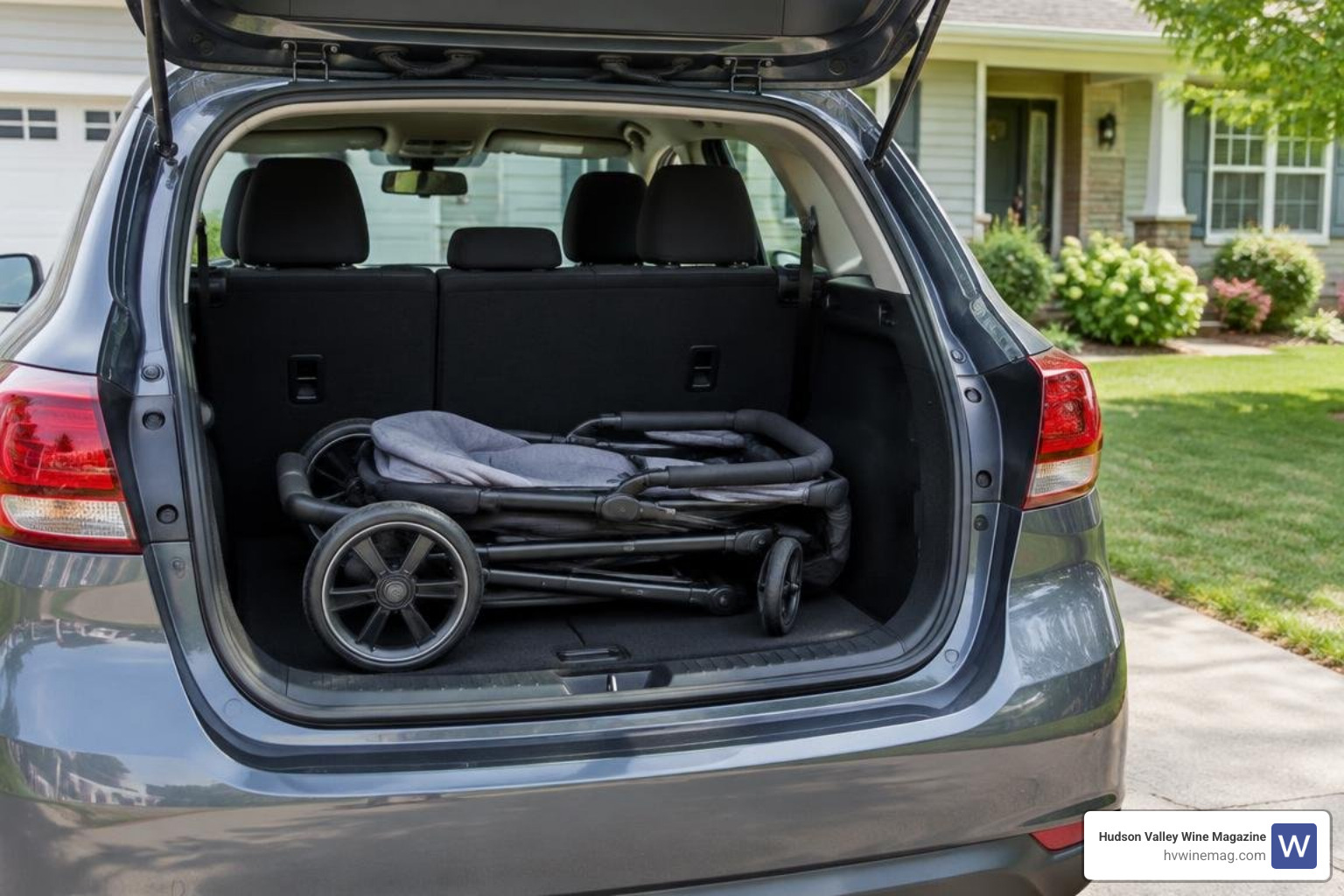
- Measure your storage and transport space: Measure your car trunk dimensions and your home entryway. A stroller that requires removing both rear wheels just to close your trunk will quickly cause frustration.
- Assess lifting requirements: If you must carry the stroller up three flights of apartment stairs, a 28-pound all-terrain model will quickly become a burden. A 14-pound compact stroller is far more practical.
- Identify newborn requirements: Newborns require specific ergonomic positioning that differs completely from toddlers who can support their own heads.
For a deeper dive into evaluating essential specifications and avoiding common pitfalls, see the practical guidelines in this Dad’s Honest Guide to baby strollers.
How to Choose a Baby Stroller for Newborns (0–6 Months)
Infants under six months old lack head and neck control, meaning they cannot sit upright in standard stroller seats. To travel safely, an infant requires one of three configurations:
- A true flat-recline seat (180° bassinet mode): Allows the baby to lie flat on their back, keeping airways fully open and promoting natural spinal development.
- A dedicated bassinet / pramette attachment: An enclosed, flat cot that clips onto the stroller chassis.
- A compatible infant car seat adapter: Allows the car seat to click securely into the frame for short travel increments.
When assessing newborn options, review this newborn stroller safety checklist to ensure your model meets structural support standards. Pediatric health experts emphasize that semi-reclined bucket seats should be used primarily for car travel, whereas flat bassinets remain the gold standard for extended newborn strolls.
Navigating Air Travel vs Everyday Commuting
For frequent flyers, travel logistics differ significantly from everyday neighborhood walking. While full-size strollers can generally be gate-checked for free at airline boarding ramps, they risk damage during transit in aircraft cargo holds.
Ultra-compact travel strollers fold small enough to meet IATA overhead bin dimensions. If your routine involves regular flights, light suburban getaways, or subway turnstiles, investing in a dedicated lightweight stroller alongside a rugged everyday model often provides the best balance.
Critical Stroller Features: Wheels, Suspension, and Safety Standards
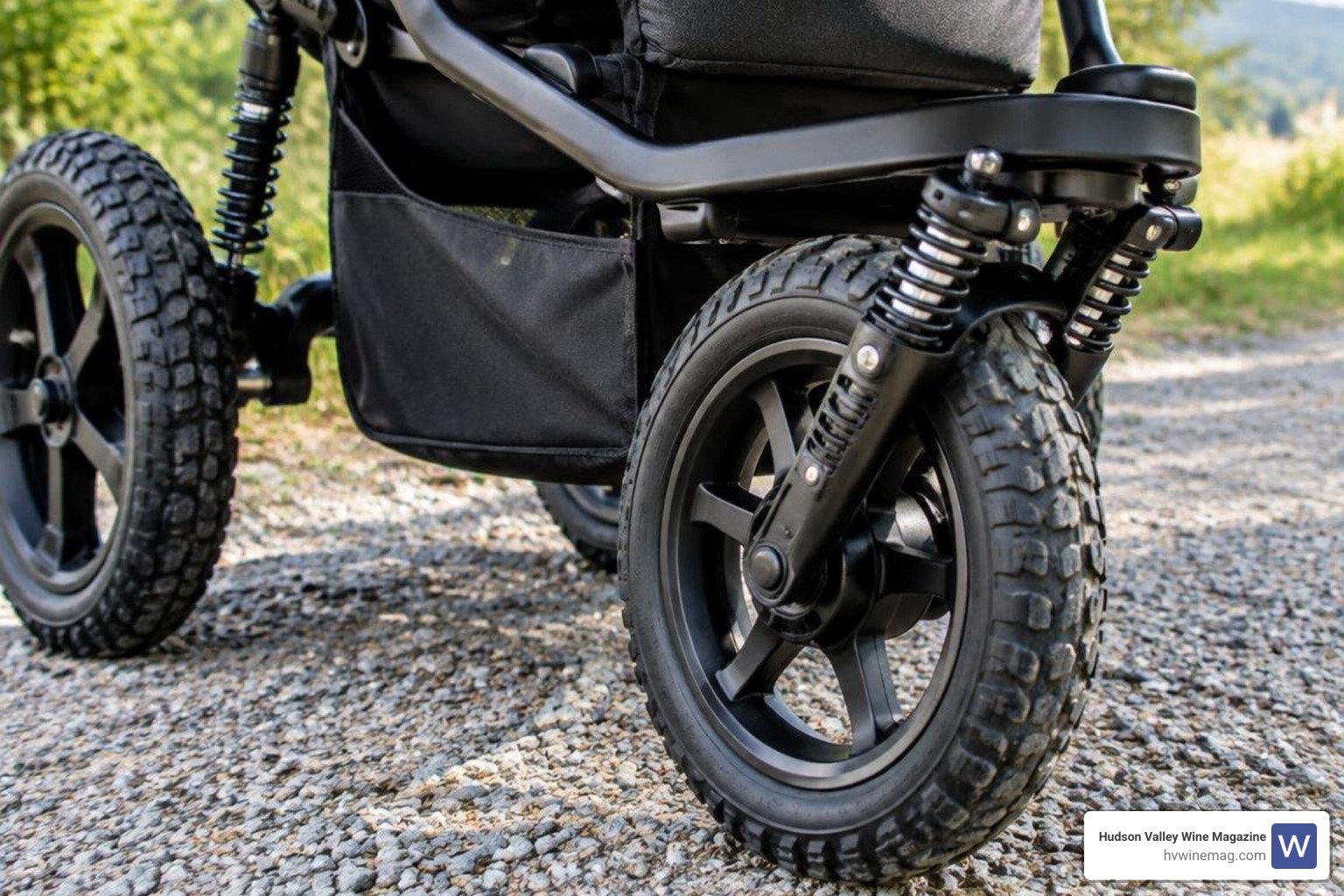
The mechanical performance of a stroller dictates how easy it is to push when loaded with a 25-pound child and 10 pounds of gear.
- Wheel Size and Material: Small, hard plastic wheels (4 to 6 inches) work well on polished indoor floors but transmit every vibration on rough pavement. Larger rubber or polyurethane wheels (8 to 12 inches), especially large rear wheels paired with smaller pivoting front wheels, deliver smooth roll resistance and superior curb-pop leverage.
- Suspension Systems: Independent all-wheel shock absorption cushions your child over uneven pavers and curbs, preventing sudden bumps from waking a sleeping baby.
- Handlebar Adjustability: Telescoping or rotating handlebars accommodate caregivers of different heights, preventing kicked rear axles and back strain during long walks.
Safety Certifications and Harness Systems
Never compromise on foundational safety engineering. Key benchmarks include:
- Five-Point Harness: Essential for preventing curious toddlers from sliding down or climbing out. Look for straps that adjust smoothly with no-rethread shoulder height mechanisms.
- JPMA Certification: In North America, the Juvenile Products Manufacturers Association verifies compliance with ASTM F833 safety standards, ensuring frame integrity, latch stability, and tip resistance.
- OEKO-TEX Certified Fabrics: Guarantees that seat materials, harness pads, and canopies are free from harmful chemicals and skin irritants.
- Parking Brakes: A linked, single-action foot brake should firmly lock both rear wheels with one tap.
Practical Folding Mechanisms and Trunk Fit Testing
A fold mechanism should never feel like a wrestling match. When testing models in-store, evaluate the fold using only one hand while holding your diaper bag (or phone) in the other.
Look for a self-standing fold feature, which keeps clean fabrics off dirty garage floors and parking lots. Always verify the folded dimensions against your trunk’s narrowest point between the wheel wells.
Common Stroller Buying Mistakes to Avoid
Many first-time parents fall into predictable purchasing traps. Avoid these common missteps:
- Prioritizing aesthetics over functionality: A chic designer frame provides little comfort if it weighs 32 pounds and struggles over basic gravel paths.
- Buying for hypothetical future children: Purchasing an oversized, heavy single-to-double stroller years before a second child arrives adds unnecessary daily bulk.
- Skipping the trunk measurement: Assuming all strollers fit in standard trunks often results in frustrating returns.
- Overspending on modes you will never use: Purchasing high-end accessories like winter muffs, rain shields, and specialty sports mounts that end up sitting in storage.
- Ignoring the push weight: Always test push feel with weight inside the seat (such as a 20-pound bag) rather than testing an empty frame.
Budget Breakdown: How to Choose a Baby Stroller on Any Budget
Strollers span a wide range of prices, but spending more does not always equal better daily usability. Explore what different price tiers offer:
- Under $150 (Entry-Level): Lightweight umbrella frames and basic strollers. Expect plastic wheels, basic suspension, and lighter fabric construction.
- $150 to $450 (The Practical Sweet Spot): Delivers full safety compliance, sturdy aluminum frames, one-hand folds, durable rubber wheels, and generous storage baskets. Most families find everything they need in this range.
- $450 to $700 (Premium Performance): Advanced modular systems, independent four-wheel suspension, puncture-proof all-terrain tires, and expandable seating configurations.
- $700 to $1,200+ (Luxury & Specialty): High-end European styling, premium textile finishes, and specialty engineering. Beyond this price point, you are largely investing in brand prestige and boutique aesthetics rather than baseline utility.
To evaluate top-performing options across these price tiers, consult this 2026 buyer’s guide to choosing the right stroller.
Frequently Asked Questions About Choosing a Baby Stroller
Can I use a regular stroller for a newborn without a bassinet?
No. Standard stroller seats are designed for infants who can sit up and support their heads (typically 6 months and older). Putting an infant in an upright or semi-reclined standard seat risks positional asphyxiation because their head can tip forward. For a newborn, you must use a fully flat recline (180°), an approved bassinet attachment, or a compatible infant car seat clipped into the frame with manufacturer adapters.
How much should I realistically spend on a first stroller?
The sweet spot for most families is between $150 and $450. In this bracket, strollers provide excellent structural safety, durable rubber-tread wheels, smooth suspension, and practical one-hand folds without unnecessary luxury markups. Spending under $100 often compromises long-term wheel durability, while spending over $700 primarily buys luxury branding, premium leatherette trims, and niche styling.
Should I buy a single-to-double stroller for my first child?
Only if you are actively expecting twins or are certain you will have a second child within two years. Single-to-double frames are heavier, longer, and more cumbersome to steer than dedicated single strollers. If your family timeline is uncertain, choose a high-quality single stroller now and evaluate a double stroller or ride-along board when your second child actually arrives.
Conclusion
Choosing the right baby stroller does not require buying the most expensive option on the market. By auditing your everyday routine, verifying newborn flat-recline safety, checking wheel materials, and confirming that the folded frame fits comfortably in your vehicle, you can choose a stroller that makes daily outings effortless.
Once you have your baby gear organized and your stroller packed in the car, family outings become an enjoyable weekend routine. If you are looking for relaxing, scenic weekend destinations to enjoy a fresh afternoon walk with your little one, consider planning relaxing family outings at Angry Orchard Cider House to experience the beauty and open grounds of the historic Hudson Valley. Choose the stroller that supports your daily lifestyle, and enjoy every journey with your growing family.