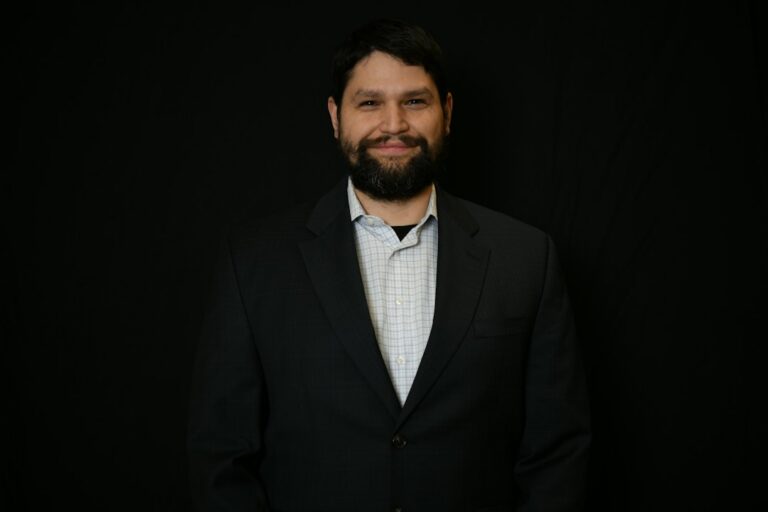
All About Michael Polansky: Who He Is
Who Is Michael Polansky?
Michael Polansky is a technology investor and entrepreneur who leads the Parker Group, which manages Sean Parker’s business and charitable interests. He has also worked in venture capital and helped launch projects in cancer research and biotechnology. Many people know him as Lady Gaga’s fiancé, but his career in tech and investment began long before their relationship became public.
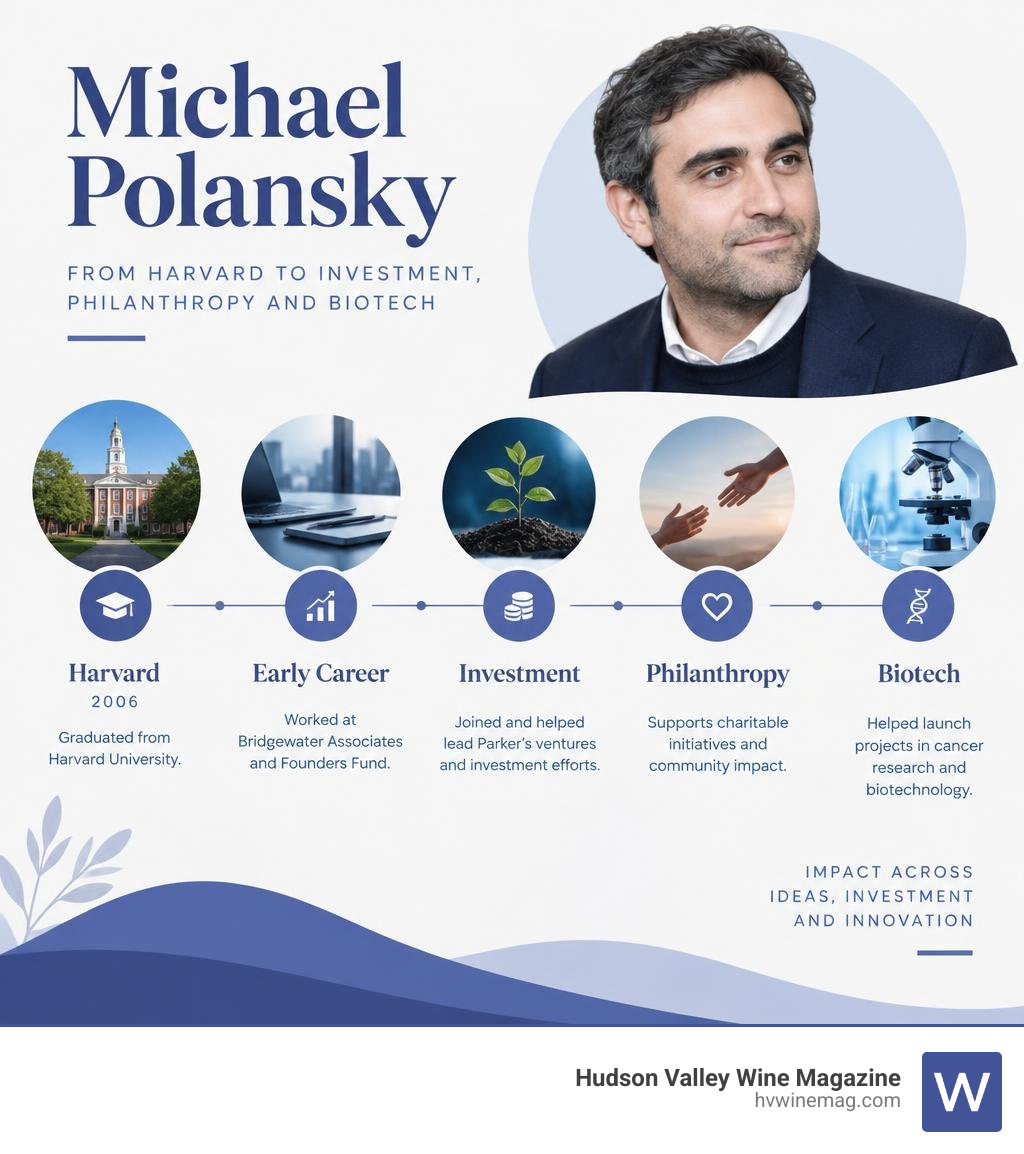
Polansky graduated from Harvard in 2006. He later worked at Bridgewater Associates and Founders Fund before taking on leadership roles with Parker’s ventures. Over the years, he has built a reputation as a disciplined operator who moves comfortably between quantitative finance, biomedical research, and the entertainment industry. His work spans early-stage investing, public policy, and the management of large-scale philanthropic initiatives, giving him an unusually broad footprint across both commercial and nonprofit sectors.
This guide looks at his career, philanthropy, and creative work with Lady Gaga. It also examines how his technical training shaped his approach to venture capital, why his biotech ventures have drawn attention from researchers, and how his personal partnership with one of the world’s most visible pop artists evolved into a working creative collaboration.
Michael Polansky: Educational Background and Early Career

Born on September 26, 1983, Michael Polansky built a strong foundation in computational science and mathematics early on. He attended Harvard University, graduating in 2006 with a Bachelor of Arts degree in Applied Mathematics and Computer Science. During his university years, Polansky developed analytical tools and problem-solving skills that became central to his future work in quantitative finance and venture investments. His coursework combined rigorous mathematical modeling with practical programming, a blend that would later distinguish his approach to evaluating both financial markets and early-stage technology companies.
Upon leaving Harvard, Polansky entered high finance by joining Bridgewater Associates, one of the world’s leading institutional asset management firms. From 2006 to 2009, he worked as an Investment Associate, conducting systematic market evaluations and quantitative analyses. This role gave him a deep understanding of market structures, macroeconomic strategy, and data-driven risk management. At Bridgewater, he learned to think in terms of large, interconnected systems—a perspective that would later inform his work in philanthropy and biotechnology, where complex problems often require coordinated, multi-institutional solutions.
Following his tenure at Bridgewater, Polansky moved into venture capital. From 2010 to 2012, he served as a Principal at Founders Fund, the prominent Silicon Valley venture firm established by Peter Thiel. At Founders Fund, he evaluated consumer internet startups and emerging technologies, building a strong network in the technology ecosystem and laying the groundwork for his future executive roles. The experience sharpened his ability to assess founding teams, product-market fit, and the technical defensibility of new platforms, skills he would carry into his later work with Sean Parker and his own investment vehicles.
Major Venture Capital and Tech Leadership Roles
Executive Roles of Michael Polansky
In 2009, Polansky began his long-standing collaboration with entrepreneur and former Facebook president Sean Parker. Taking the helm as Chief Executive Officer of the Parker Group, Polansky oversaw the management of Parker’s expansive commercial, political, technological, and philanthropic portfolios. The role placed him at the center of a wide-ranging operation that required balancing investment returns with long-term social impact, a dual mandate that has defined much of his career.
His leadership expanded across multiple major institutions:
- The Parker Foundation: Established in 2015 with a $600 million endowment from Sean Parker, the foundation focuses on large-scale systemic solutions in life sciences, civic engagement, and global public health. Polansky serves as Executive Director.
- The Parker Institute for Cancer Immunotherapy (PICI): Co-founded by Polansky in 2016, PICI connects top academic medical centers across the United States to accelerate breakthrough immunotherapy research. The institute’s collaborative model was designed to remove barriers between leading cancer centers and speed the translation of laboratory discoveries into clinical treatments.
- Economic Innovation Group (EIG): Founded in 2013, this bipartisan public policy organization advocates for market-driven economic growth and created the framework for Opportunity Zones. Polansky’s involvement reflects his interest in using policy tools to direct private capital toward underserved communities.
- Hawktail & Bunsen: In 2021, Polansky launched Hawktail, an early-stage venture capital fund, and co-founded Bunsen, a specialized design studio for frontier technology startups. Detailed overviews of Michael Polansky’s venture leadership and investment portfolio illustrate his focus on climate tech, artificial intelligence, robotics, and deep tech.
- Unless Management LP: Since 2022, Polansky has served as a Partner, guiding investment strategies across private equity and next-generation enterprises.

Biotechnology and Entrepreneurial Ventures
Beyond traditional asset management, Polansky has played an active role in biomedical innovation. In 2019, he co-founded Arsenal Biosciences, a clinical-stage cell therapy enterprise developing programmable T-cell treatments for solid tumors, where he serves as a board observer. The company’s work represents a next step in cancer immunotherapy, moving beyond blood cancers to address the more difficult challenge of solid tumors.
In 2022, Polansky co-founded Outer Biosciences, stepping into the role of Chief Executive Officer. The biotechnology company focuses on overcoming limitations in dermatological research. Outer Biosciences engineered the proprietary Yuna platform, a major leap in ex-vivo human skin modeling. While traditional skin tissue samples often degrade within days, the Yuna platform maintains tissue viability for up to four weeks, allowing researchers to study human skin disorders like psoriasis and test topical treatments without relying on animal models. This extended viability window gives scientists a more realistic and ethically attractive tool for drug discovery and disease modeling.
Public records documenting Michael Polansky’s corporate network and executive positions reflect his broad executive presence across both commercial enterprise and non-profit research boards.
| Venture / Organization | Inception Year | Polansky’s Executive Role | Core Sector Focus |
|---|---|---|---|
| The Parker Group | 2009 | Chief Executive Officer | Multi-Asset Portfolio & Governance |
| Economic Innovation Group | 2013 | Co-Founder | Policy, Capital Formation, Regional Growth |
| The Parker Foundation | 2015 | Co-Founder & Executive Director | Systemic Philanthropy & Public Health |
| Parker Institute for Cancer Immunotherapy | 2016 | Co-Founder & Board Member | Oncology & Cellular Immunotherapy |
| Arsenal Biosciences | 2019 | Co-Founder & Board Observer | Cell Therapy Engineering |
| Hawktail | 2021 | Founder & Managing Partner | Frontier Tech, AI & Climate Tech VC |
| Bunsen | 2021 | Co-Founder | Product & Brand Design for Deep Tech |
| Outer Biosciences | 2022 | Co-Founder & Chief Executive Officer | Ex-Vivo Skin Biology & Drug Discovery |
Relationship, Music Collaborations, and Family Life with Lady Gaga
How Michael Polansky Met Lady Gaga and Creative Partnerships
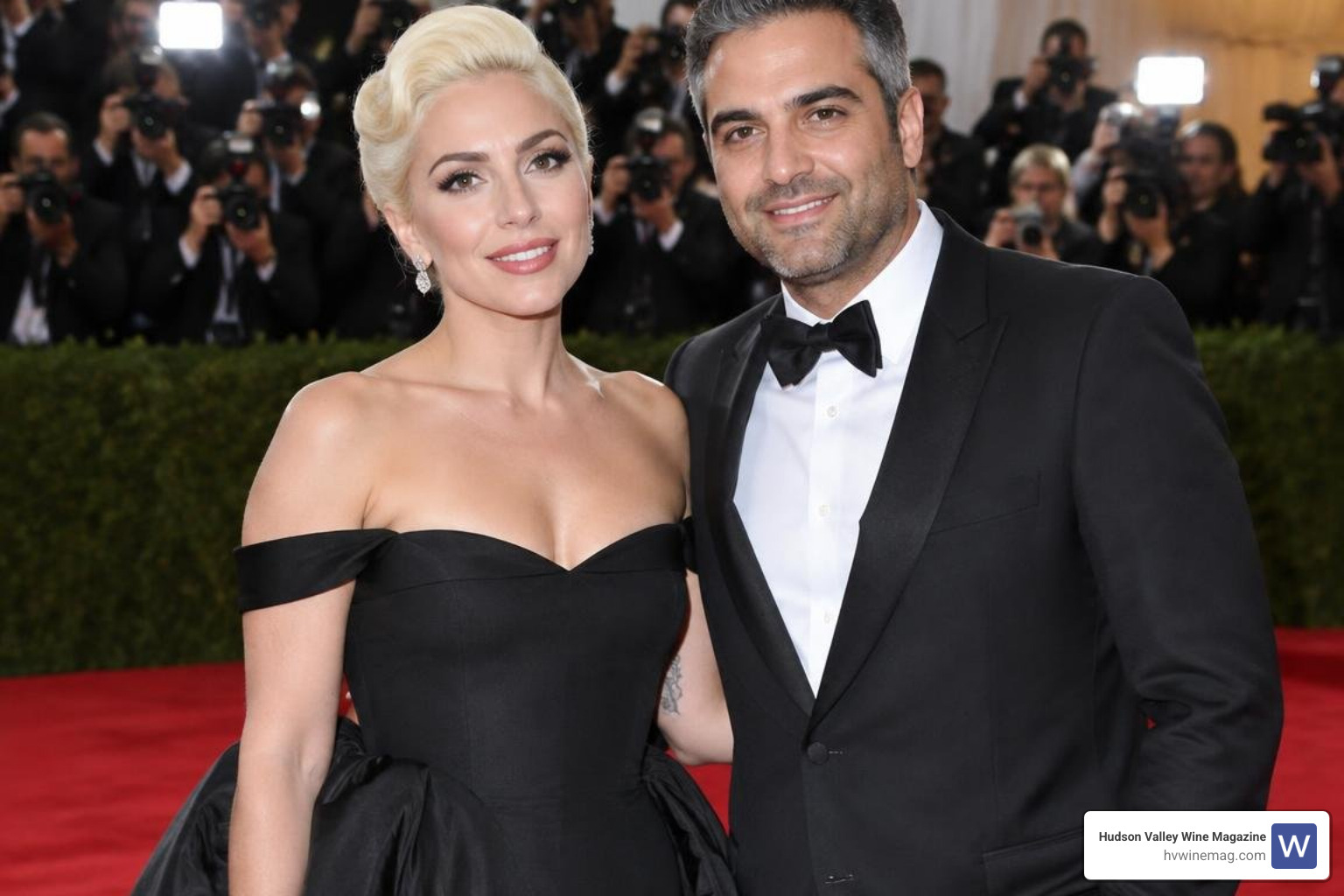
Polansky and Lady Gaga (Stefani Germanotta) were first introduced in late 2019 through shared philanthropic circles and social gatherings connected to Sean Parker. Their relationship became public in early 2020. During quarantine in the early stages of their romance, the two formed a close personal and creative bond. Away from the usual demands of touring and public appearances, they spent long stretches of time together that allowed their relationship to deepen quickly and naturally.
Their partnership soon extended into creative work. While continuing his biotech ventures, Polansky contributed to several of Gaga’s major artistic projects:
- Album Production & Songwriting: Polansky received co-writing and production credits on Lady Gaga’s 2024 companion record Harlequin and her 2025 studio album Mayhem, contributing to songs such as “Disease” and “Blade of Grass.” His background in structured, analytical thinking translated surprisingly well into the collaborative process of songwriting, where he helped refine lyrical ideas and shape the emotional arc of individual tracks.
- The Mayhem Ball: Bridging his operational background with live entertainment, Polansky helped co-produce Gaga’s 2025–2026 worldwide concert tour, The Mayhem Ball. The role drew on his experience managing complex, multi-stakeholder projects, from logistics and scheduling to the coordination of creative teams across multiple cities.
- Haus Labs Board Membership: In 2024, Polansky joined the board of directors of Haus Labs by Lady Gaga, advising on operations and strategic scaling for the clean cosmetics brand. His venture capital experience proved valuable as the company expanded its retail footprint and refined its product development pipeline.
Engagement and Welcoming Their First Child
The couple became engaged in 2024, later sharing the news publicly around their joint red-carpet appearance at the Venice International Film Festival. The story behind their engagement inspired the track “Blade of Grass,” which recounts a spontaneous moment in nature when Polansky asked her how she envisioned a proposal, leading him to fashion an impromptu ring from a blade of grass. The song captures the unpolished, deeply personal quality of that moment, and it has become one of the most discussed tracks on Mayhem.
In 2026, the couple welcomed their first child, a daughter named Rose Bean. Gaga has often noted how Polansky’s steady presence, emotional support, and practical problem-solving helped her navigate difficult periods with chronic pain and mental wellness, making their relationship a true equal partnership. Friends and collaborators have described Polansky as a grounding influence in Gaga’s life, someone who brings calm and structure without overshadowing her creative independence.
Frequently Asked Questions About Michael Polansky
What is Michael Polansky’s professional background and net worth?
Michael Polansky is an American technology executive, venture capitalist, and bio-entrepreneur. A 2006 Harvard graduate in Applied Mathematics and Computer Science, he leads the Parker Group, co-founded the Parker Foundation, serves as CEO of Outer Biosciences, and manages the venture firm Hawktail. While his exact private wealth is not disclosed publicly, his executive leadership across multi-billion-dollar foundations, equity holdings in high-growth biotech startups, and leadership of prominent investment firms place his personal net worth securely in the multi-million-dollar tier. His compensation and equity positions across these ventures are not publicly reported, but the scale of the assets he oversees suggests substantial personal holdings.
How did Michael Polansky contribute to Lady Gaga’s music?
Polansky co-wrote and produced songs on Lady Gaga’s studio albums Harlequin (2024) and Mayhem (2025), including the lead singles “Disease” and the personal ballad “Blade of Grass.” He also helped co-produce her international tour, The Mayhem Ball. His contributions extended beyond writing credits, as he was involved in the broader creative direction of the projects and helped manage the operational side of bringing the music to live audiences.
What is Outer Biosciences and what does it do?
Outer Biosciences is a biotechnology company co-founded and led by Polansky in 2022. It developed the Yuna platform, a technology that keeps human skin tissue viable outside the body (ex vivo) for up to four weeks. This breakthrough enables researchers to study chronic inflammatory diseases and test dermatological drugs directly on real human tissue, reducing reliance on animal testing. The platform has generated interest from pharmaceutical companies and academic labs seeking more predictive models for skin biology and topical drug development.
Conclusion
Michael Polansky’s career shows how technical expertise, venture investment, and creative curiosity can work together. From building long-term initiatives in cancer research and advancing laboratory tools in skin biology to co-writing chart-topping music, he continues to navigate both the technology and creative worlds with focus and care. His path from quantitative finance to biotech entrepreneurship and, eventually, into the recording studio reflects a rare ability to apply disciplined thinking across fields that rarely intersect.
At Hudson Valley Wine Magazine, we appreciate how thoughtful vision, precision, and passion come together—whether advancing biotechnology in research labs or carrying forward the craft beverage heritage of our region. Just as forward-looking leaders bring modern ideas to complex fields, you can see how regional makers balance craft and modern methods in our feature on tradition and innovation at regional craft beverage makers like Angry Orchard Cider House.