When you want to find vineyards in New York, head to the water. Rivers, lakes, oceans, and bays.
Water is one of New York’s greatest viticultural assets, because large bodies of water act as air conditioners, both warming and cooling the air and land around them, and mitigating the extremes that happen in both winter and summer.
Bodies of water also served more practical purposes in the early colonial era of the United States, which indirectly contributed to the evolution of wine culture here.
The Hudson River shaped agriculture by transporting early Dutch settlers, farmers, and merchants, and their goods from the bountiful fields and farms of the Hudson Valley to New York Harbor. Lake Champlain linked Canada to the St. Lawrence river. Those waterways acted as literal and metaphorical conduits of information, products, people, and technology, well before anyone conceived of them as federally recognized wine regions.
Birth of Two American Viticultural Areas
The two New York American Viticultural Areas (AVAs) appear, at first glance, completely different.
The Hudson River Region AVA was established in 1982. It is home to America’s oldest continuously operated winery (Brotherhood Winery), and has more than three centuries of winemaking history behind it. Hemmed in by the Taconic and Berkshire Mountains to the east of the River, the Catskills Mountains and Palisades cliffs to the west, and the Adirondack Mountains to the north, the climate is humid and sunny even amid winter’s harsher cold tempests. There are around 59 commercial wineries in the AVA, with 446 acres under vine, and 79 winegrowing farms.
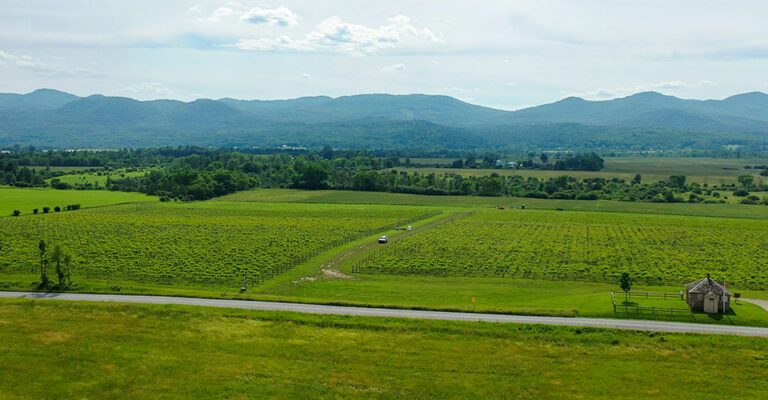
The Champlain Valley AVA, meanwhile, is one of the youngest and most under-the-radar AVAs in the country. Established in 2016, the AVA is bordered by the Adirondack Mountains to the west, the Green Mountains of Vermont to the east, the Taconic Mountains to the south, and Canada to the north. Lake Champlain is 435 square miles, 12 miles wide at its broadest point, and flows north to the St. Lawrence River. The climate is cold, with a short but intensely sunny wine-growing season. There are seven wineries operating across 21 farms, with 122 acres of grapes under vine.
The AVAs sit about 200 miles apart. One is older and defined by a river. One is new and defined by a lake.
And yet both share similar paradigms, strengths, and challenges. Both have historically been considered too cold and too challenging for the crafting of fine wine. Both have pioneers who ignored the assumptions of others and followed their guts. In the process, they have built—and are building—a viticulture for a new generation, a more extreme climate, and a new way of thinking about the place of wine in our lives today.
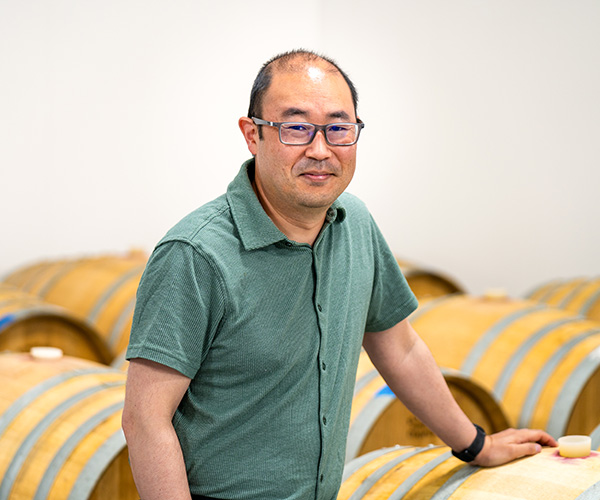
“That’s why I came to the Champlain Valley from Napa,” says Kyle Mizuno, Director of Winemaking at Rolling Hills Estate Winery in Westport, NY. “After crafting dozens of 90+ point Cabernet Sauvignons in one of the world’s most established wine regions, I wanted to create something new. Here, I knew I’d have the opportunity to use all of the winemaking techniques I spent decades perfecting in Napa to craft small-batch wines that express the remarkable character of next-generation American varietals.”
Building By Adapting
The key words there, of course, are “next-generation.” Nothing can remain static, and part of the reason wine culture has been such an important part of life for 8,000 years, is its ability to evolve.
The Hudson Valley’s wine roots date back to the 1600s, making it the oldest wine-growing region in the country. In 1976, the passage of New York’s Farm Winery Act occurred, and the modern era of winemaking in the region was born, with an influx of talented winemakers. Just six years later, the Hudson River Region AVA was officially recognized.
Viticulture in the Champlain Valley is a recent phenomena, and the outgrowth of years of research across the country into new-generation varietals that both meet the needs of a changing climate while also delivering aesthetic pleasure in the glass.
“As Director of Winemaking, I can barely contain the excitement I have at working with these grapes,” Mizuno says. “I am able to explore the potential of new grapes like Marquette, Petite Pearl, La Crescent and Frontenac Gris. I can utilize all of the winemaking techniques I learned in Napa working with legends like Philippe Melka, Heidi Barrett, David Abreu, Aaron Pott, and the late Michel Rolland, to create terroir wines that deliver bright acidity, concentrated fruit, and remarkable freshness.”
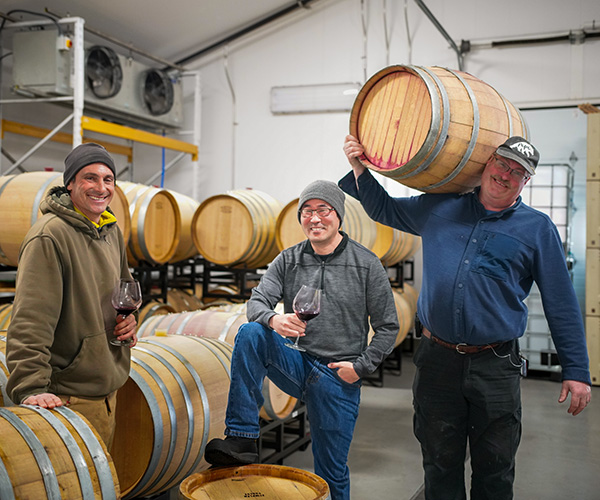
This food-friendly palate is exactly what wine lovers want today, and Mizuno feels it is an honor to be able to craft these wines for a new winery in an untested AVA. “I feel connected to the early vignerons of the Hudson Valley, who have led the winemaking Renaissance currently happening across the Empire State,” he says.
Today, wine lovers have more choices than ever. As people increasingly seek discovery, authenticity, connection, and quality, Mizuno hopes they discover Rolling Hills Estate Winery.
The Farm Winery Act transformed the Hudson Valley. The recognition of the Champion Valley’s viticultural potential in 2016 is the process of transforming the Champlain region. “At Rolling Hills, I’ve already welcomed curious winemakers and growers from across the country who are curious to be part of this Valley’s growth from the beginning. I look forward to welcoming the many enthusiasts of one Valley to ours,” says Mizuno.
Join the journey of discovery today by becoming one of the first members of Rolling Hill’s Genesis Circle, a new way to appreciate wine and connect with the people and place behind every sip.